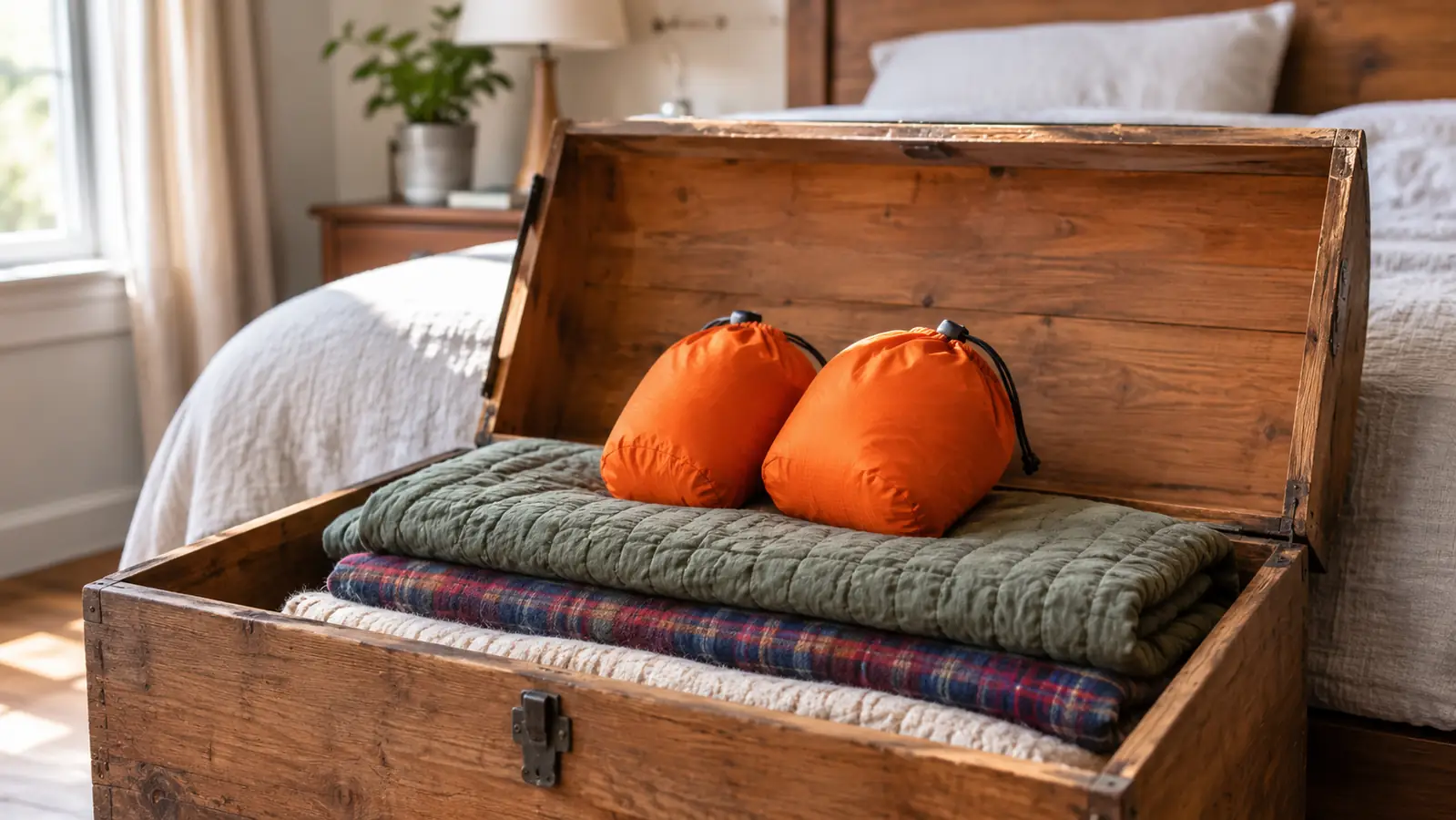
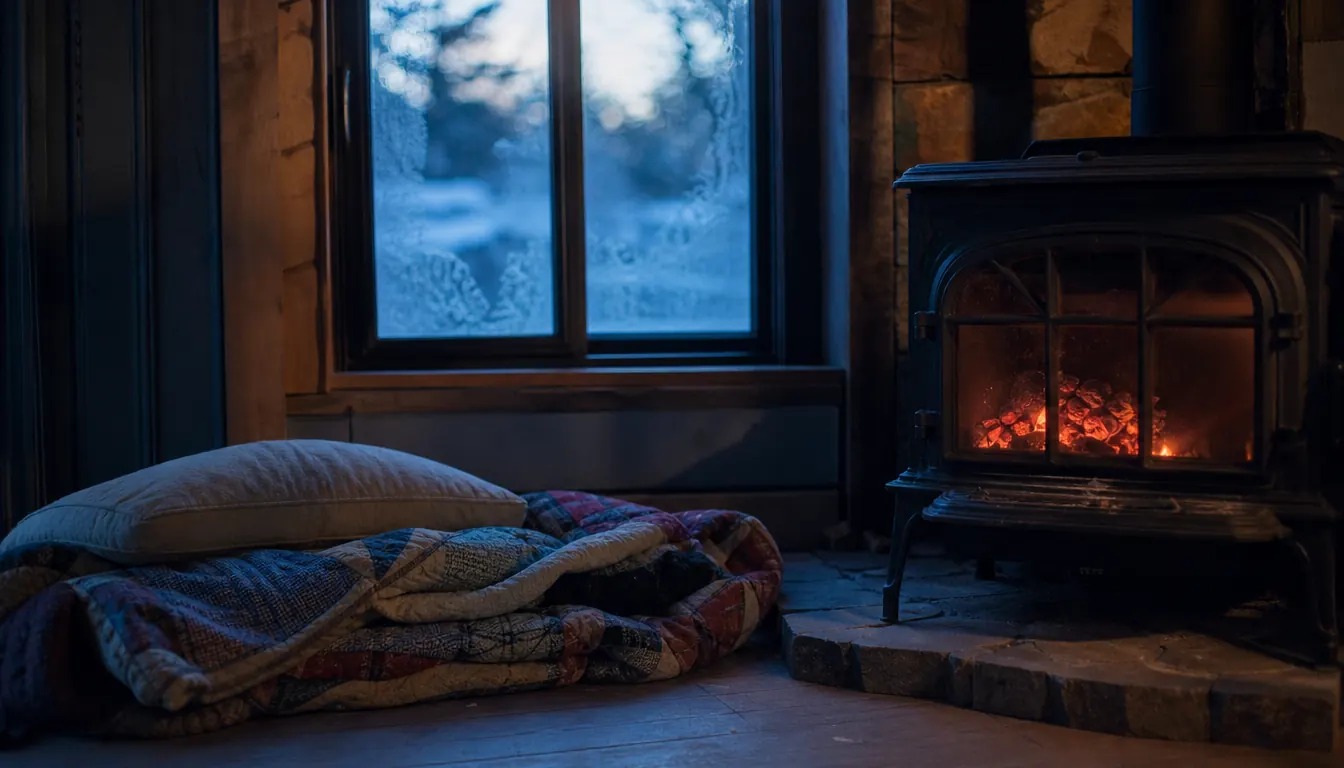
I bought two Go Time Gear Life Bivy emergency sleeping bags in February, one for me and one for Hollis, because of a cold night in the den last January. We had slept in the den two nights under quilts, the wood stove holding the room near 62 degrees. On the last night, toward dawn, the stove burned down and I lay there cold. Nobody was hurt. Nothing dramatic happened. I just decided I did not want that to be the plan again. Nine months later the bags live in the cedar chest at the foot of our bed, on top of the spare quilts, and I have used mine exactly once.
I am 61, retired three years ago after thirty years on a rural mail route, and I am not a winter camper. My idea of roughing it is a cold floor in my own house. What I wanted was not a tent or a backpacking setup. I wanted something small enough to keep in the cedar chest that would make a cold night in the den less miserable if the heat went out again. That is the whole job I bought the Life Bivy to do. I am judging it against that job, not against a mummy bag in the Rockies.
The Quick Verdict
A small, loud, genuinely warm layer for a cold room. It is not a sleeping bag you plan a night around, and it is not meant to be.
Amazon Check Today's Price →A small bag for the cold room you actually have
Two Go Time Gear Life Bivy bags sit in my cedar chest because a cold dawn in the den was enough to teach me the lesson. If your outage plan has quilts and a coat but nothing that holds heat close, start with the bag I tested.
Amazon Check Today's Price on Amazon →How I've Used It
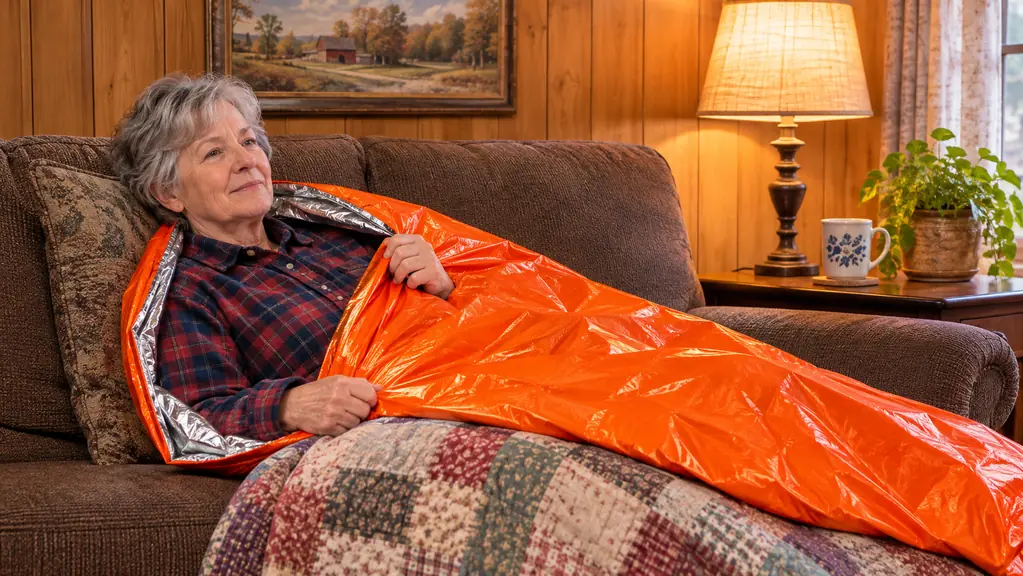
Exactly once, and I want to be plain about that. On a cold evening in late February, I took mine out of its stuff sack, sat on the den sofa, and got inside it the way you get into a sleeping bag. I pulled a quilt over the top. The heat was on. I stayed about an hour. That is the only time either bag has been out of its sack. I have never slept a night in it. I have never used it as a loose blanket or as a liner inside another bag. Hollis has never opened his. It is still in its sack.
I did not test it outdoors. The trial was one hour on my own sofa with the heat on, because I wanted to know how the material felt against my clothes and how much noise it made in a quiet room. That is not a survival test. It is a familiarity test. I would rather learn the crinkle and the damp in my den than learn it in the dark.
I bought two because there are two of us. His is still in its sack. If the power goes out and the den turns cold, there is one for each of us.
What the Go Time Gear Life Bivy Is
Go Time Gear sells this as a one-person emergency sleeping bag. The listing says it retains up to 90 percent of body heat, and I am quoting the listing, not a thermometer I own. The material is polyethylene. It packs into a small stuff sack about the size of a soda can, with a 120-decibel whistle and 20 feet of paracord attached. The listing gives the bag weight as 4.1 ounces, and 5.6 ounces with the sack, whistle and cord. That is light enough to keep in a cedar chest and forget about until you need it.
The listing also says it can be used as a sleeping bag, a blanket, or a liner inside a regular sleeping bag. I have only used it as a bag. I cannot tell you how it performs as a liner because I have not tried it that way, and I am not going to guess. I can tell you there is no temperature rating on the listing. Anyone who says this bag is good to a specific degree is making that up. Treat it as a layer that holds heat close, not as a substitute for a real sleeping bag or a warm room.
I have never used the whistle or the paracord. I have never blown the whistle and I have never tested the cord. They are attached, which means they stay with the bag, and that is all I can say about them.
It warmed up fast. It crinkled like a chip bag every time I moved. Both of those things are true at once.
The February Trial, and What It Taught Me
The first thing I noticed was how quickly it warmed up. I got inside, pulled the quilt over the top, and within a few minutes I was not shivering. The second thing I noticed was the noise. Every shift of an arm or a leg made a sharp crinkle. If Hollis had been asleep on the other end of the sofa, I would have woken him. The third thing took longer. After about an hour the inside was damp from my own body. The material does not breathe, so the moisture has nowhere to go. I got out, wiped it dry, and let it air overnight.
Getting it back into the sack took a few tries. You fold, roll, and press, and it does not want to go the first time. I got it done, but I did not enjoy it. The next morning I put it back in the cedar chest and left it there. I have not taken it out since, and I have not needed it in an outage since I bought it. That is not a complaint about the bag. It is the honest record of how often I have needed it, which is not at all since that one evening.
Here is what that hour changed. Before the trial, I thought of the bag as a sleeping bag. After the trial, I think of it as a heat layer that happens to be shaped like a bag. That sounds like a small distinction. It is not. A sleeping bag is something you plan a night around. A heat layer is something you pull over yourself when the quilt is not enough and you do not want to get up and feed the stove. That is the job I have for it now.
Where It Fits in a Cold Night at Home
A bag like this is not a plan by itself. In the next cold outage I would use it inside the den, inside or under the quilts, as an extra layer. I would keep my face out at the top. I would not put it over my head or face, and I would not use it as the only thing between me and the cold. The wood stove is in the den. This bag is thin plastic, so it stays away from the wood stove, candles, and any open flame. Never bring a camp stove, grill or generator indoors to stay warm. If a long outage comes and local officials open a warming center, go. A bag in a cedar chest is not a reason to tough it out at home.
That is the honest place for it. It is a layer. It is not a sleeping bag you plan a night around, and it is not a replacement for quilts. I have quilts. I like my quilts. The bag is for the hour before dawn when the stove has burned down and the quilt alone is not holding enough heat. That is a narrow job, but it is a real one in a house with electric heat and a wood stove that needs feeding.
Two people in one bed or on one sofa change the math. Body heat helps. But I would not put two adults in one Life Bivy. It is a one-person bag. I bought two because one per person is the only sensible way to use it. If Hollis and I are both cold, we each have our own. If only one of us is cold, the other bag stays in its sack. That is simple, and simple is what I want at that hour.
Both bags live in their stuff sacks in the cedar chest at the foot of our bed, on top of the spare quilts. They are not in the hall closet. They are not in the backpack. They are not in the pickup. During the April flood evacuation they stayed home in the cedar chest, which is where they belong, because they are for cold at home, not for leaving. I do not check them on a calendar. They sit in the chest and I leave them alone. That is the advantage of a bag with no battery and no moving parts.
What I Don't Like
The crinkle is the first thing. Every move makes noise. In a quiet house it is loud. The damp inside after an hour is the second. The material does not breathe, so condensation is going to happen. I wiped mine dry and aired it overnight, but on a cold night in a real outage you may not have a dry cloth or the patience to deal with a wet bag in the middle of the night. The third is the repack. It took a few tries to get it back into the sack, and I do not expect that to get easier.
There is also no temperature rating. That is not a defect exactly, but it means you cannot shop this bag by degrees. You have to think about your room, your quilt, your clothes, and how long you might be cold. The listing says up to 90 percent of body heat retained, and I believe it warms up. I do not believe a number like that tells you what to expect at any given outside temperature. It is a heat holder, not a furnace.
If you want a bag you can sleep in for a full night, this is not that bag. I am not saying a full sleeping bag is bad. I am saying it is a different purchase. This one is small, light, and simple enough to keep in a chest for an emergency. The trade is that you give up comfort and convenience. I knew that going in. The trial reminded me of it.
I thought about a wool blanket instead. I do not own one, and I am not going to pretend I tested one. A wool blanket is a different tool. It is heavier, it does not crinkle, and it can be used every night. The Life Bivy is for the night you did not plan to be cold. I already had quilts for the everyday cold. I did not need another blanket. I needed a small layer I could keep in the chest and forget about.
What I Liked
- Small enough to live in a cedar chest and light enough to forget
- Warms up fast once you are inside
- Listing says it retains up to 90 percent of body heat
- Whistle and paracord stay attached to the bag
- Simple enough that there is nothing to charge or maintain
Where It Falls Short
- Crinkles loudly every time you move
- Inside gets damp after about an hour because it does not breathe
- Repacking into the stuff sack takes a few tries
- No temperature rating, so you cannot shop by degrees
- Not a replacement for a real sleeping bag, quilts, or a warming center
Who This Is For
This is for someone who already has a way to stay in their house for a few days and wants a small layer for the cold part. It is for a person who has quilts and a safe heat source and knows how to use both. It is for a house like mine, one story, electric heat, a den with a wood stove, and a chest at the foot of the bed. It is for the neighbor who knows they should have a plan and keeps putting it off, because this is a small thing to add to a plan that already exists. It is not for the truck, for leaving, or for a boat. It is for the cold room at home.
It is also for the person who wants a layer that does not need a battery, a charge, or a shelf of spare parts. I have other supplies that need a calendar. This bag does not. That is why I like it in the cedar chest. Nine months after I bought it, it is still there, and I do not have to think about it until the stove burns down.
Who Should Skip It
Skip it if you want a sleeping bag for camping. This is not that. Skip it if you need a temperature rating, a full bag you can sleep in comfortably, or something you can hand to someone else and call it done. Skip it if you have no quilts and no safe way to stay warm, because a thin bag is not a shelter and not a heat source. Skip it if you will not keep it away from flame. Thin plastic and a wood stove do not mix.
Skip it if you are looking for a bag that will replace a warming center or a real bed in a long outage. It will not. It is one layer in a house that already has layers. If your plan is thin, this bag does not fix it. If your plan is mostly there and you want one more thing for the cold hour before dawn, this is a reasonable thing to add.
The cedar chest bag I would buy again
I bought two Go Time Gear Life Bivy bags after one cold dawn in the den. Nine months later, mine has been used once, Hollis's has never been opened, and I would still make the same purchase. If a cold room is part of your outage worry, this is the small layer I would start with.
Amazon Check Today's Price on Amazon →