
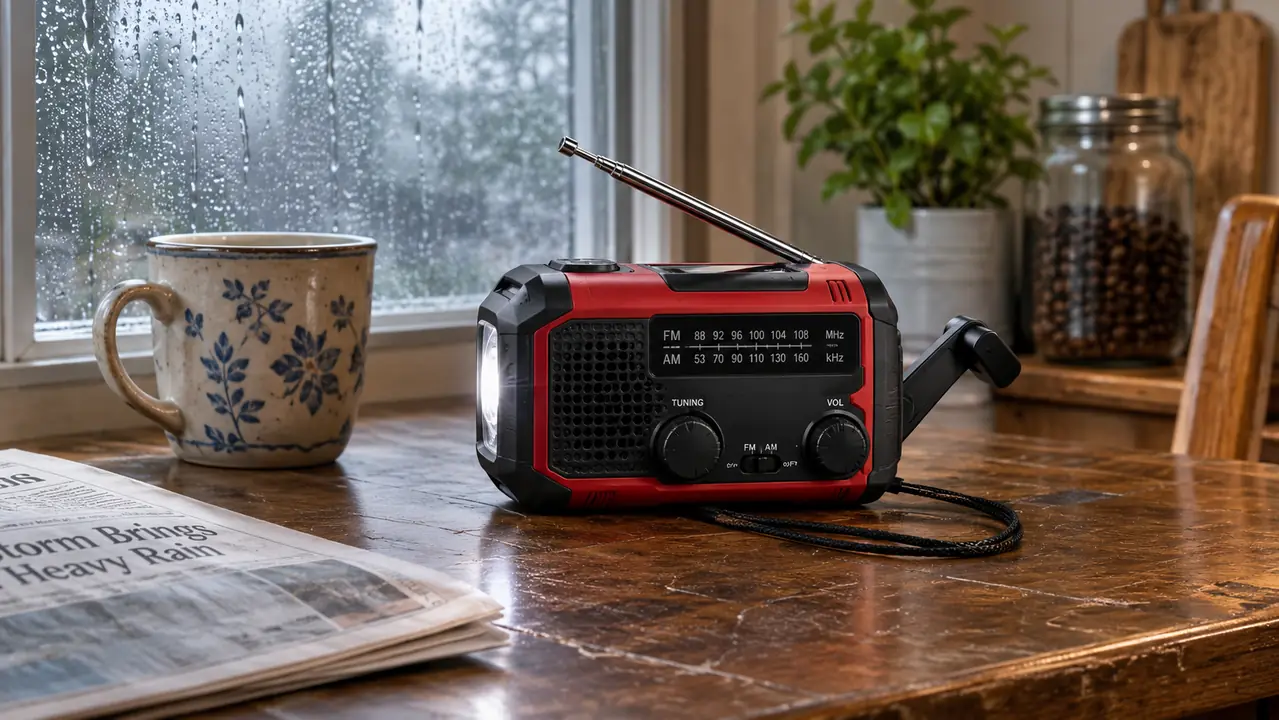
August of last year a thunderstorm took the power out a little after nine at night and did not give it back until morning, about nine hours in all. My phone was at 11 percent. I had no idea whether the line of storms was finished with us or just getting started, and there was nothing in the house to tell me. That was the night I decided we needed a radio. By September I had a Midland ER310 sitting on the kitchen table, and I have had it for fourteen months now.
I am not a person with a bunker in the yard. I carried mail on one rural route in the hills of middle Tennessee for thirty years and retired three years ago, and what that job taught me is smaller than people expect: most of a bad night is just not knowing. The wind is up, the lights are out, and the only question that matters is whether this is a nuisance or whether you need to do something about it. A radio answers that question. So does a phone, right up until the battery or the signal gives out, and in my experience those two things fail at the hour you need them most.
The Quick Verdict
Fourteen months, one three-day ice storm and one tornado warning later, the Midland ER310 is the item on my list I would replace first if it broke. It is not water resistant and it will not charge your phone, and it does not pretend to be either.
Amazon Check Today's Price →The one thing that stayed on my kitchen table all winter
Crank power, six AA batteries in the box, AM, FM and the weather band, and a flashlight bright enough for a dark hallway. About a pound. No app, no account, no setup.
Amazon Check Today's Price on Amazon →How I've Used It
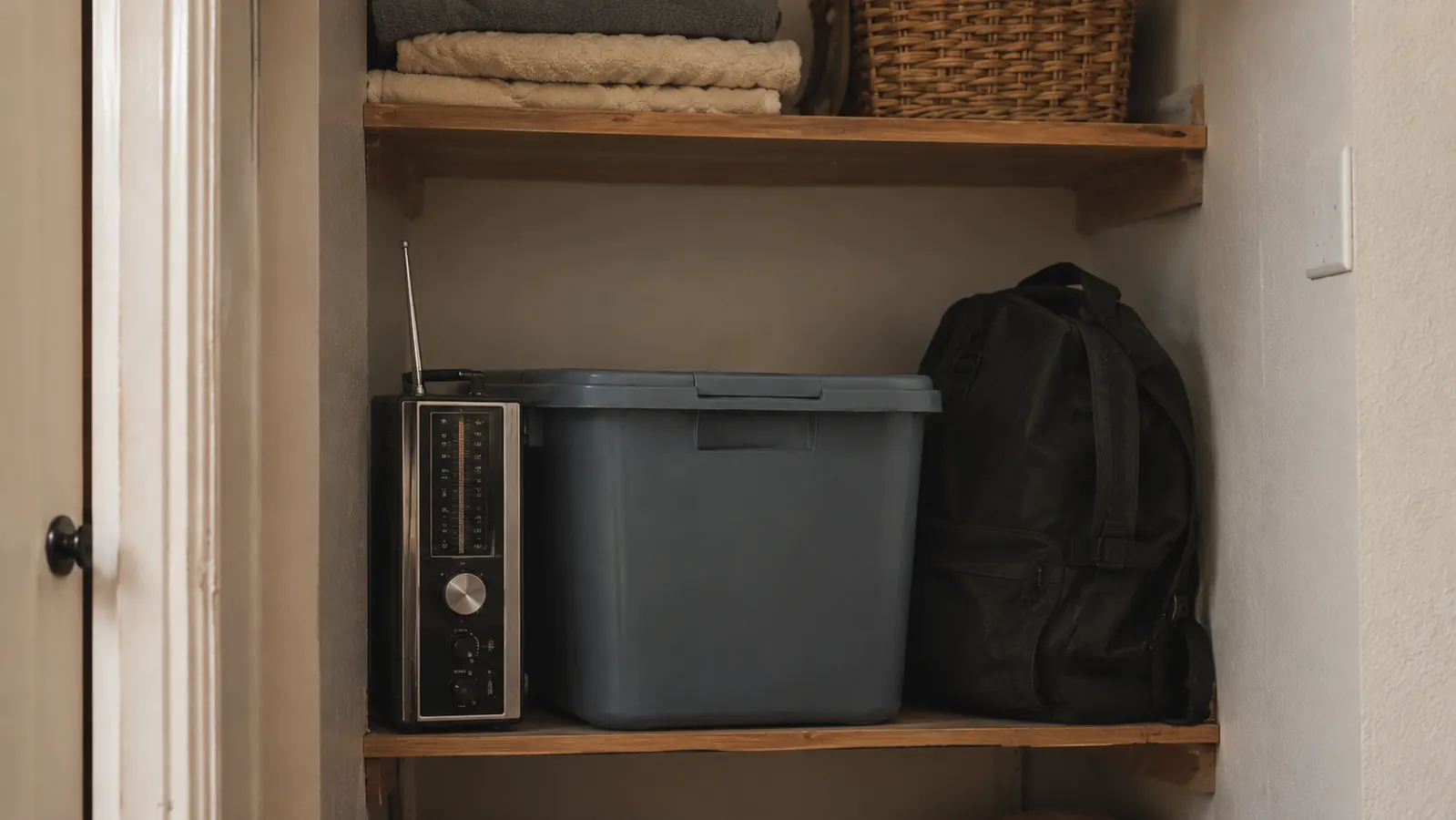
The Midland ER310 lives on the kitchen table from November through May and on the shelf in the hall closet from June through October. That is not a schedule I drew up for the sake of a review. It is just where it ends up. Winter is when ice brings the lines down and an outage runs long, so the radio sits where I can reach it without hunting for a flashlight. Summer storms here blow through in an hour, and the closet shelf is close enough.
What I do with it is not complicated. When weather is coming I turn it on, put it on the weather band, and leave it low. Most days it just sits there, and I am fine with that, because a radio like this is only asked to work on the few days the rest of the house does not. The weather band is the part I bought it for. It also pulls AM and FM. There is no app, no account, no pairing, and no setup beyond putting the six batteries in. That was the appeal. My phone will do a hundred things. The radio does one, and it does it with a crank.
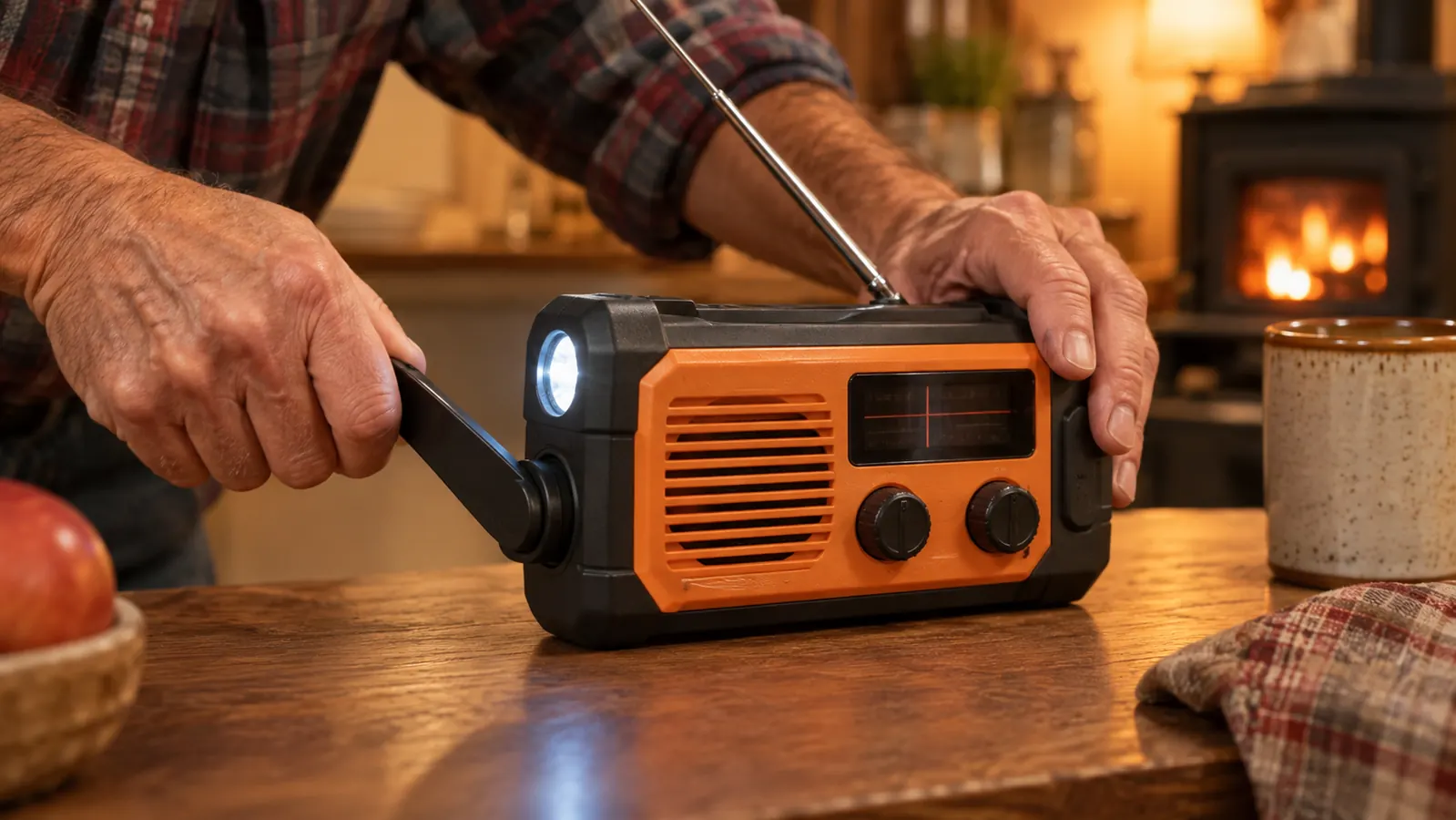
The built-in flashlight is the part I reach for on an ordinary night. It is bright enough to walk a hallway. I have used it to get to the closet more times than I can count, and I used it during the ice storm. A radio with a light on it sounds like a small thing until you are the one feeling along a wall.
The Crank, the Six Batteries, and the Solar Panel I Quit On
The crank is the reason I bought this one instead of a plain battery radio. On the first night of the ice storm I sat at the kitchen table and turned it, and it played while I turned it. That is the whole test and it passed. The crank is what I reach for first when a storm takes the power, and after that the six AA batteries that came in the box take over. That order worked in the one real outage I have had since I bought it, and I have no reason to change it.
The six AA batteries that came in the box are the part I did not expect to matter. On the second morning of the ice storm I switched from the crank to the batteries, and those six ran the radio from Wednesday morning through Friday noon and never ran down. I have never changed them. I do not keep a spare set, which is a gap I know about and have not fixed, and the crank is what covers it.
The solar panel is the feature I stopped counting on. I set it on a windowsill one gray afternoon to see what it would do, and what it did was very little. I have not relied on it since, and it played no part in the storm. If you are buying this for the panel, understand that you are really buying it for the crank and the batteries. The panel is a nice thought on a sunny day.
There is a USB connection on it, and it will give a phone a small top-up. I have done that once or twice. It is not a phone charger, and the crank will not charge a phone no matter how long you turn it. I would not want anybody buying this thinking otherwise. Keeping a phone alive for three days is a different purchase with a different weight to it. The radio's job is news. I let it do that job.
Three Days of Ice in January
The storm that tested it came in late January of this year. Freezing rain started on a Tuesday afternoon. About six in the evening a limb came down across the line and the house went quiet. I had owned the radio about four months by then. It was already on the kitchen table, because it was January. I cranked the Midland that night and heard the forecast, which was ice and then more ice.
Wednesday morning the cell signal got weak and then stopped for most of the day. That was the only time through any of this that my phone has failed me on signal, and it happened on the day I wanted it most. The radio did not care. I switched it over to the six batteries and left it on the table. Around noon it passed along a boil water notice from our water district.
Thursday the road stayed iced over and nobody went anywhere. Ray walked down from up the road to check on us and said his generator was running fine, and then he walked back. Friday around noon the power came back. Three days, two people, one radio on a table, and not a single hour of it where I did not know what the weather was doing.
The same six AA batteries that came in the box ran the radio from Wednesday morning until Friday noon and never ran down. I have never changed them.
The Two in the Morning in March
In March there was a tornado warning overnight. Storms were forecast, so before bed I carried the radio to the nightstand. At about two in the morning it went with us to the hall, which is the only inside space in this house without a window. We sat on the floor with it on the weather band and listened.
It passed to the north of us. No damage here and no trees down along our road, and the power stayed on the whole time. The next morning the radio went back to the kitchen table and I made coffee and that was the end of it. I bring it up because that is what most of these nights are: nothing happens, and you are awake anyway, and the difference between those two hours and a much worse two hours is whether you can hear what is going on.
What It Is Not
It is not water resistant, and that is the limitation that matters most. The listing says so plainly and I am telling you plainly. Mine has never been out in weather because it does not go outside. It lives indoors, on a table or a shelf. If you want a radio for a boat, a barn or the bed of a truck, this is the wrong one and you should keep looking.
It is also a radio and only a radio. It is plastic, it weighs about a pound, and it measures roughly 9.61 by 2.95 by 6.85 inches, so it sits flat on a table and does not crowd it. There is an AM, FM and weather band tuner and a built-in flashlight. In fourteen months it has never been dropped or damaged, which I put down to it never leaving the house. If what you want is one device that does eleven things badly, this is not that device.
What Fourteen Months Has Not Told Me
I have not tested this radio in a hurricane, a wildfire or a flood, and I am not going to claim otherwise. I have not tested it in the heat of July, because it spends July in a closet. I have not tested it after a drop, because it has not been dropped. I have not run the batteries down to nothing to see what happens when they finally quit. Those are real gaps and a careful reader should weigh them.
What I can tell you is what I actually did with it. One night on the crank, the rest of the storm on the batteries that came in the box, one boil water notice, one overnight tornado warning, and a spot on the kitchen table from November through May. That is a narrow set of experience. It is also close to the set of experience most people buying a weather radio are going to have, which is why I wrote it down this way instead of running a bench test.
What I Liked
- The crank works when the batteries and the wall both fail, and it keeps playing while you turn it
- The six AA batteries in the box ran it from Wednesday morning to Friday noon without running down
- AM, FM and the weather band, with no app, no account and no setup
- The built-in flashlight is bright enough for a hallway
- About a pound, small enough to carry from the kitchen to the hall in the dark
- Fourteen months with no repair, no drop and no failure
Where It Falls Short
- Not water resistant, so it stays indoors
- The USB connection gives a phone a small top-up and nothing more, and the crank will not charge a phone
- The solar panel did very little on a gray day and I stopped counting on it
- Six AA batteries came with it and no spares, so a spare set is on you
- It spends part of the year in a closet, and keeping up with it is a habit rather than a feature
Who This Is For
This is for the household that wants to know what the weather is doing when the lights are out and the phone is either dead or useless. If you live out past the edge of town, on a road where the line comes down most winters, you already know why. If your signal is thin on a good day, you know better than I do. And if you have ever stood in a dark kitchen at eleven at night wondering whether the worst of a storm had passed, this is a simple way to stop wondering.
It suits people who will actually turn it on. That sounds like a low bar and it is not. The radio did nothing for me sitting in a closet. It earned its keep because it was on the table in January and because I had learned to turn it on when weather was coming. The device is about a pound. The habit is the part that does the work.
Who Should Skip It
Skip it if what you want is a way to keep a phone alive for three days. That is a power station and it weighs seven pounds, not one, and it is a different purchase entirely. Skip it if you need something that can get rained on. Skip it if you already keep a good radio in the kitchen and you know it works.
And skip it if you are buying it to feel prepared rather than to be prepared. I say that as somebody who has a hall closet full of things and had to learn the difference. A radio in a closet is a plastic box. A radio on the kitchen table in November is a plan. Put it where you will see it, turn it on, listen to the weather band for thirty seconds, and then go make your coffee. Do that through one winter and you will not have to think about it when the line comes down.
Put it on the table in November and leave it there
Crank, six AA batteries, AM, FM and the weather band, and a built-in flashlight. About a pound, not water resistant, and honest about what it is. Mine has been on the job for fourteen months.
Amazon Check Today's Price on Amazon →