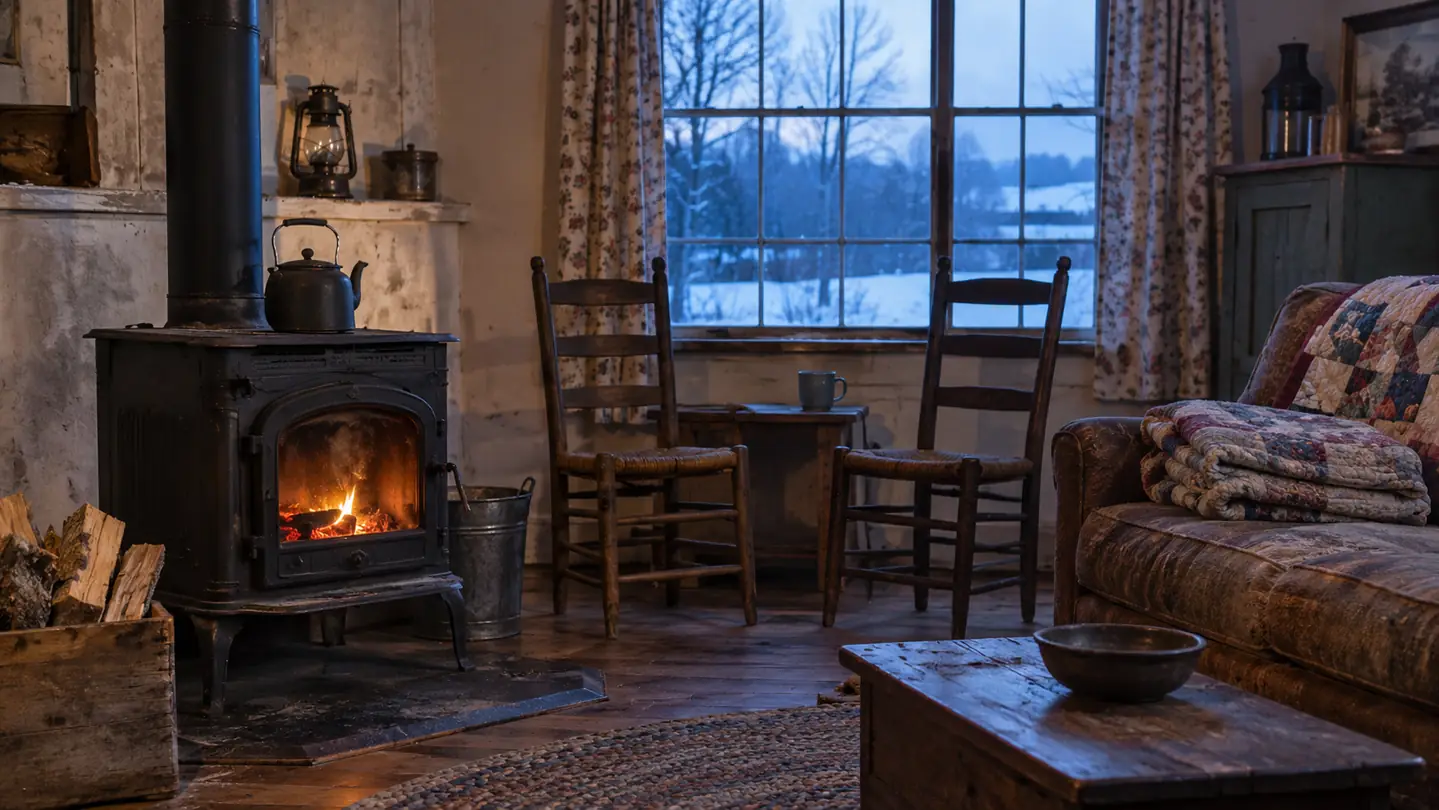
The coldest I have been in my own house was not out in the weather. It was in the den on the last night of the ice storm last January, in the hour before daylight, when the wood stove had burned down to a few red pieces and I lay there cold under my quilt. The power had been out since Tuesday evening. With the stove fed, the den held about 62 degrees. By that hour it held less. Hollis was asleep two feet away under his own quilt. Nobody was hurt, nobody got sick, and the lights came back Friday around noon. But I lay there thinking about the hall closet and how little in it was built for keeping a body warm. In February I bought two Go Time Gear Life Bivy emergency sleeping bags, one for each of us.
So here is the short answer before the long one. For a winter outage in an intact house, with the two of you staying put, a wool blanket is the better thing to spend eight hours under. For warmth you can keep in a drawer, for a second layer over bedding you already own, and for a layer that packs smaller than a coffee mug, the Go Time Gear Life Bivy wins, and on weight it is not close. I do not own a wool blanket. My bedding is quilts, and I am not going to tell you they failed me, because they did not. What I wanted that morning was one more layer that did not need the stove fed.
The hall closet is not empty of warmth. The Ready America backpack on the floor just inside the door holds two foil survival blankets, and I am glad they are there. They are small, they rustle, and they are meant to get a person off a cold hillside, not to get them through a night in their own den. What I wanted was something I could get inside of.
| Go Time Gear Life Bivy | Wool blanket | |
|---|---|---|
| Packed size | Stuff sack about the size of a soda can | Folds to a shelf, but a good one is bulky in the arms |
| Weight | 4.1 ounces, about 5.6 with the sack, whistle and cord | Several pounds |
| How fast it warms | Warmed up fast in my one hour inside it | Takes a while for wool to pick up your heat |
| Eight hours in a cold room | Warm inside, then damp after about an hour because it does not breathe | Breathes and handles damp, so it holds up over a long night |
| Reuse | One emergency bag; mine has been out of its sack once | Aired, washed and used again for years |
| Noise | Crinkles loudly every time you move | Silent |
| Two people | One person per bag, so two bags for the two of us | One blanket covers two people on a sofa |
| Attached extras | A 120 decibel whistle and 20 feet of paracord | Nothing attached |
| Carrying it to another room | Goes in a coat pocket without a thought | An armful, and it does not stay folded |
| After a night in it | Wipe it dry, air it overnight, then a few tries to get it back in the sack | Air it out, wash it when it needs it |
| As an extra layer with quilts | The listing says bag, blanket, or liner inside a regular sleeping bag | Adds a layer on top of what you have |
Where the Go Time Gear Life Bivy Wins
Weight and size are not small matters in a dark house. The bag is 4.1 ounces, and about 5.6 with the stuff sack, the whistle and the cord. The sack is roughly the size of a soda can. Both of ours live in the cedar chest at the foot of the bed, on top of the spare quilts, which means I can put a hand on one without a light. That is the whole argument in a sentence: it is small enough to keep where you sleep instead of where you store.
The second thing is speed. On a cold evening in late February I unpacked mine and got into it on the den sofa, the way you get into a sleeping bag, with a quilt over the top and the heat on. It warmed up fast. The listing says it holds up to 90 percent of your body heat, and I did not put a number on that myself. I can tell you it was warm inside of a few minutes, and warmer than the quilt alone. The sack also carries a whistle the listing puts at 120 decibels and 20 feet of paracord. I have never blown the whistle. I have never needed the cord. They are on there, and that is the whole of what I can say about them.
The repack is the part nobody mentions. After that hour on the sofa I got out, wiped the inside dry, and let it air overnight. Rolling it back down small enough for the sack took a few tries, and I did it on the kitchen table with the sack held open in one hand. That is not a complaint. It is the trade for a bag that fits in a coat pocket. But it does mean the Go Time Gear bag is not a thing you pull out and put away every evening. You open it when you need it, and the rest of the time it stays rolled. That is exactly why both of ours are still in the cedar chest, nine months on, sitting on top of the spare quilts.
The third thing is that it stacks. The listing says it works as a sleeping bag, as a blanket, or as a liner inside a regular sleeping bag, and the liner use is the one that matters to me. In the next cold night I would be inside it and under the quilts, not in place of them. Two of us, two bags. Hollis has never opened his. It is still rolled in its sack where I put it in February.
Where a Wool Blanket Wins
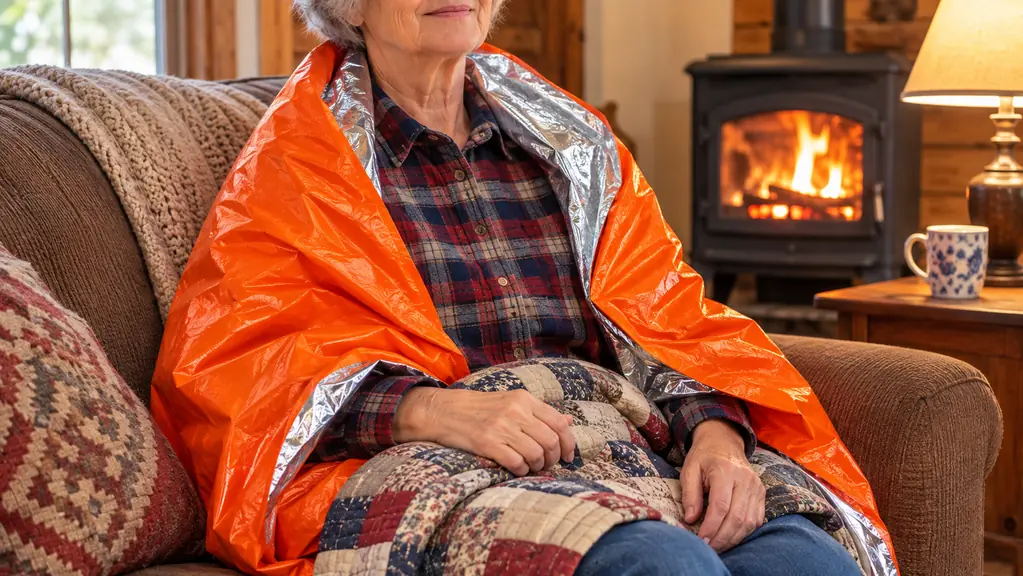
Eight hours is a different job than one hour, and this is where the bag shows its limits. It does not breathe. After about an hour on that sofa the inside was damp from my own body, and I got out, wiped it dry, and let it air overnight before I rolled it back up. A wool blanket handles that better. Wool handles moisture and keeps a good share of its warmth even after it has taken on some damp, which is why it has been the bedding of cold country for a long time. If I had to lie under one thing from dark to daylight in a 55 degree room, it would be wool.
Wool is also quiet, and that is not a small thing when two people are sleeping in one room. The bag crinkles loudly every time you move. Every time. I turned over twice on that sofa and stopped counting. A wool blanket does not announce you. It also covers two people at once, where a bivy is one person per bag, and it can be aired and washed and used again next winter and the winter after that. Ours would be quilts, but the principle holds for wool.
If you are shopping for one, the things that matter are weight and size, not the label stitched on the edge. A blanket heavy enough to be worth carrying is also an armful, so decide now where it lives and whether you can get to it in the dark without a light. Wool also wants to be dry. A blanket stored flat against a damp closet wall will smell like a basement by the time you need it, so keep it where air moves and shake it out when the seasons turn. None of that is difficult. It is just the sort of chore a person puts off until the night the stove quits.
It warmed up fast. It also crinkled like a feed sack every time I moved, and after about an hour the inside was damp from my own body.
The layer that does not need the stove fed
Two bags live in the cedar chest at the foot of the bed, one for each of us. 4.1 ounces, a sack the size of a soda can, and a whistle on the cord I have never had to blow.
Amazon See the Life Bivy on Amazon →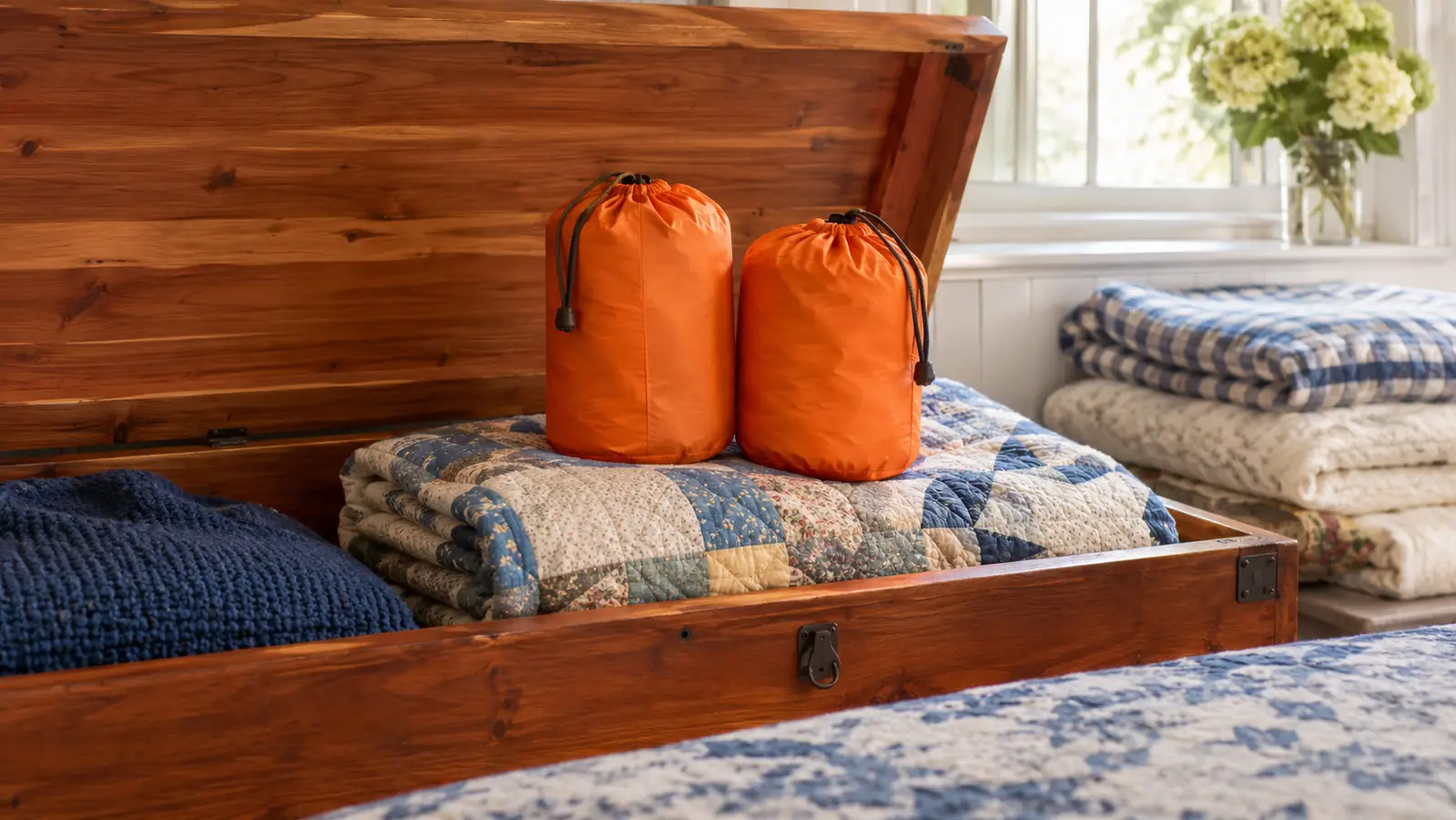
Who Should Buy Which
Buy the bivy if the heat in your house depends on something that can quit, and your backup is a stove you have to keep feeding. Buy it if you want a layer that lives beside the bed instead of on a shelf in another room. Buy it if there are two of you, because two bags is the honest number and one bag is a rotation.
Keep the wool, or buy one, if your plan for a winter outage is to stay in one room for three days and you want the thing you sleep under to be the thing you already know how to use. Wool wins the long night. It wins the two-person sofa. It wins on being used again. It loses on weight by several pounds and on packability by a mile. If you already own a good wool blanket, you are not missing anything for staying home.
What I did was buy two bags and keep the quilts. Hollis and I are two people in one house, and one bag between us would have been the kind of purchase that looks like a plan and is not one. If you are buying for a household, count the people and buy that many. If you are buying for one, buy one and put a wool blanket on your list for the winter after.
If you own neither, buy the wool first. That sounds odd from a person who just told you to buy two bags, but a blanket is the thing you will use every winter, and the bag is the thing you hope to use rarely. The bag is insurance. Insurance is worth having and it is not the first thing you buy. What moved me was one cold hour before daylight, and I had quilts already. If your house runs colder than mine, or your stove is smaller than ours, the order flips and you should be looking at both at once.
How I Would Set It Up Next Time
The Go Time Gear bags stay in the cedar chest. If the power goes out and the night turns cold, I would bring both of them down to the den before dark, not at two in the morning. I would get inside mine and pull the quilts over the top. The bag is an extra layer, inside or under what you already have, and it is not a replacement for a real sleeping bag, for quilts, or for a warming center. It keeps your face out at the top. Do not pull it over your head or your face.
The order matters more than the gear does. Before dark I would carry both sacks down and lay them on the sofa, because fumbling with a stuff sack by lamplight is worse than doing it at four in the afternoon. Water and the radio first, then the bedding, then the stove fed while there is still enough light to see the woodpile. If the den keeps dropping after that, we go to the warming center in town rather than sit it out. Two people, one house, one wood stove, and a county that will open a building when the cold runs long. There is no prize for staying.
It is thin plastic, and that decides where it can go. Keep it away from the wood stove, from candles, and from any open flame. Never bring a camp stove, a grill or a generator indoors to stay warm. Ours cooks on the back porch or it does not cook. And no bag is a plan on its own. Watch what your local officials and your utility tell you, and if they open a warming center or tell you to go, go. The one thing I would tell a neighbor is to try the bag once, in the house, with the heat on, before the night they actually need it. I am glad my first time inside mine was a February evening on the sofa and not a dark den at two in the morning.
The rest is the same list I keep every winter. Water in the closet, the radio on the kitchen table from November through May, the power station charged on the first of March, June, September and December, and a spare lighter with the camp stove. The bags are one more line on that list, and they are the easiest line to keep, because keeping them means leaving them alone.
One for each of you, before the next cold night
4.1 ounces, a sack the size of a soda can, and a listing that says it holds up to 90 percent of your body heat. The part I can vouch for is that it warmed up in a few minutes on a February evening.
Amazon See the Life Bivy on Amazon →