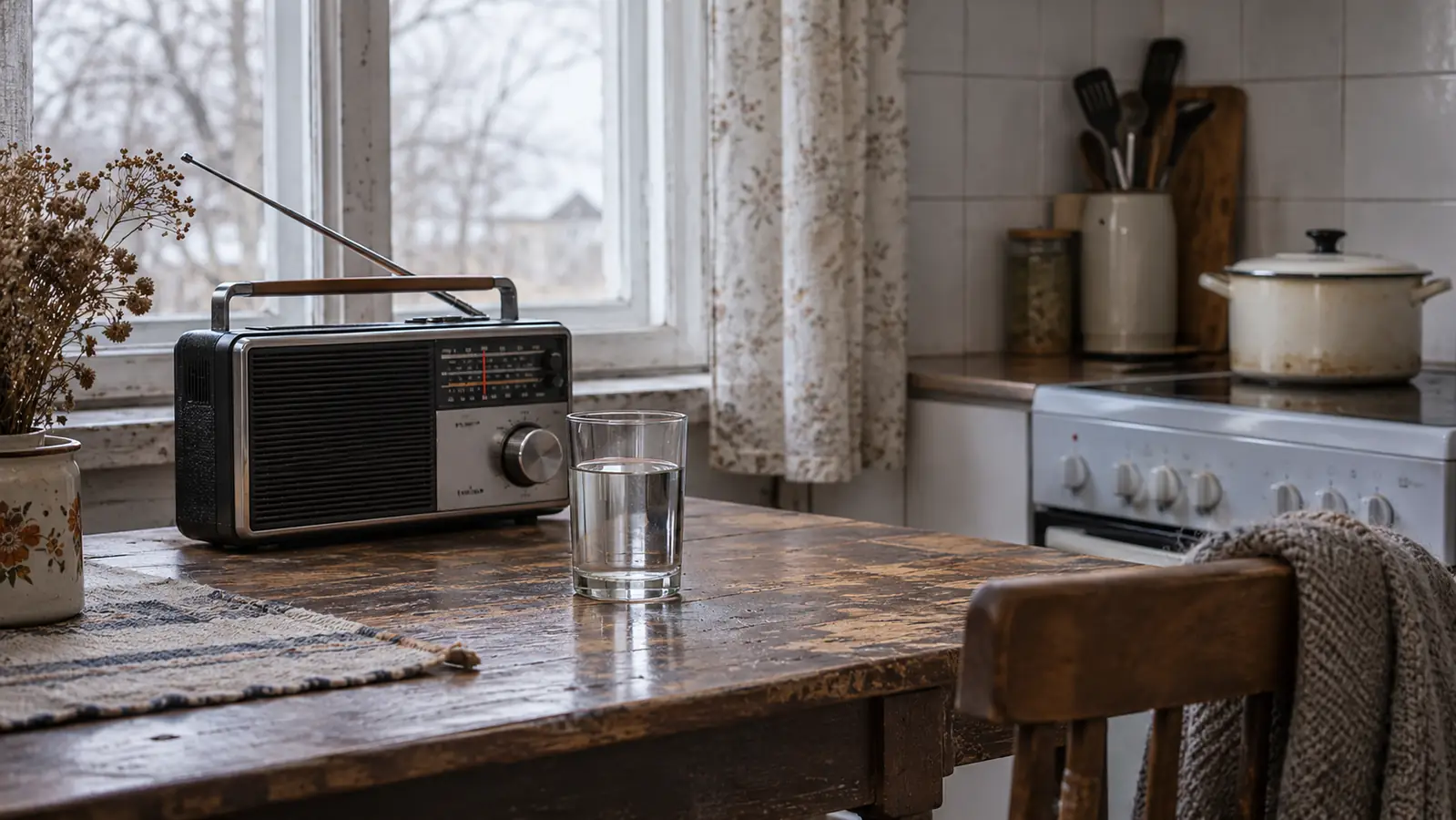
The boil water notice came at about noon on the second day, and it came the way everything came that week, over the kitchen radio. The water plant had lost power like the rest of the county. Up to that point I had been thinking about the cold and the dark. I had not been thinking about the tap, and that is the mistake I want to save you from. Our water kept running. It just stopped being something you could trust without doing something to it first. That is a different problem than having no water at all, and it is the one most people after a flood actually end up with.
I keep two LifeStraw Personal filters, one for me and one for my husband Hollis, and I want to be careful about what I claim for them. A filter is not a water system. It is one small thing that weighs almost nothing, needs no power, and owns a specific job in a plan. I am 61, I spent thirty years carrying mail on one rural route, and I am not a first responder. What follows is how I would go about finding safer drinking water after a flood, where the LifeStraw fits, and where it stops.
Two filters, 1.62 ounces each, and no battery to be dead when you reach for it
The LifeStraw Personal is what goes in the pack for the day the stored water runs out and the notice is still up. Read the current listing for the full spec sheet before you count on it for anything.
Amazon Check Today's Price on Amazon →The Five Steps, In the Order I Would Take Them
Step 1: Get the Official Notice Before You Do Anything Else
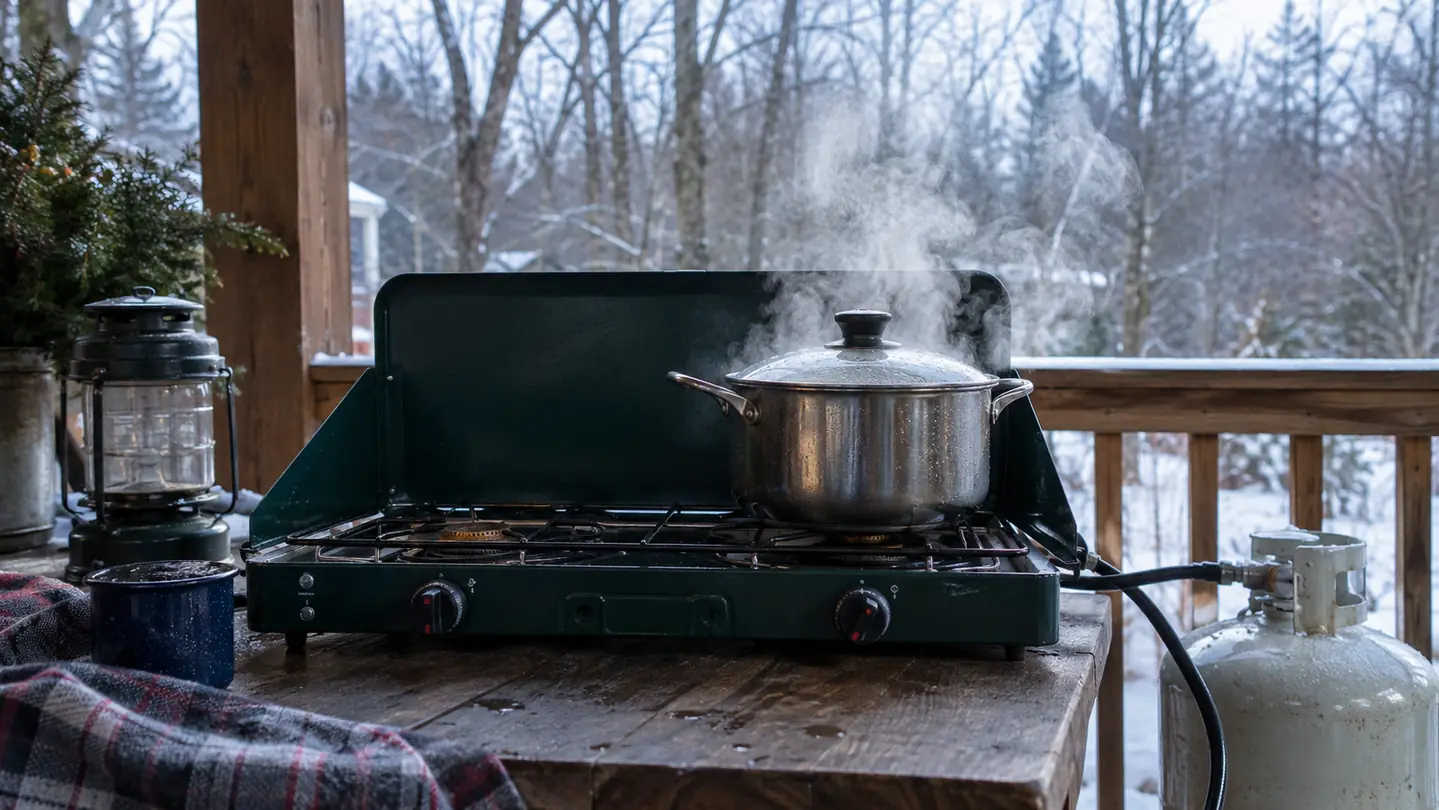
In January the notice came from our utility district and it said boil. Not filter. Boil. So we boiled, on the two-burner propane camp stove out on the back porch, never in the house, and between boils we drank from the bottled water I had put up. Six gallons went into the hall closet the fall before. We were down to about two by the time the notice lifted on Sunday.
The reason to start there is that the people running your water know what got into it and you do not. A hollow fiber membrane is good at one particular job, and a boil order is asking for a different one. Follow the notice. If your officials say do not drink it, do not drink it. If they say leave, put the bag in the truck and leave, and take your water with you. I have never been through a hurricane and I am not going to pretend I know what that order looks like on the ground. I know what a boil notice looks like, and I know it is not a suggestion.
One more thing about notices. They get lifted on somebody else's schedule, not yours. Ours ran from Wednesday noon until Sunday, and the power had been back since Friday noon. Two full days of boiling with the lights on. Plan for the notice to outlast the outage, because around here it did.
Step 2: Learn What the Filter Takes Out and What It Does Not
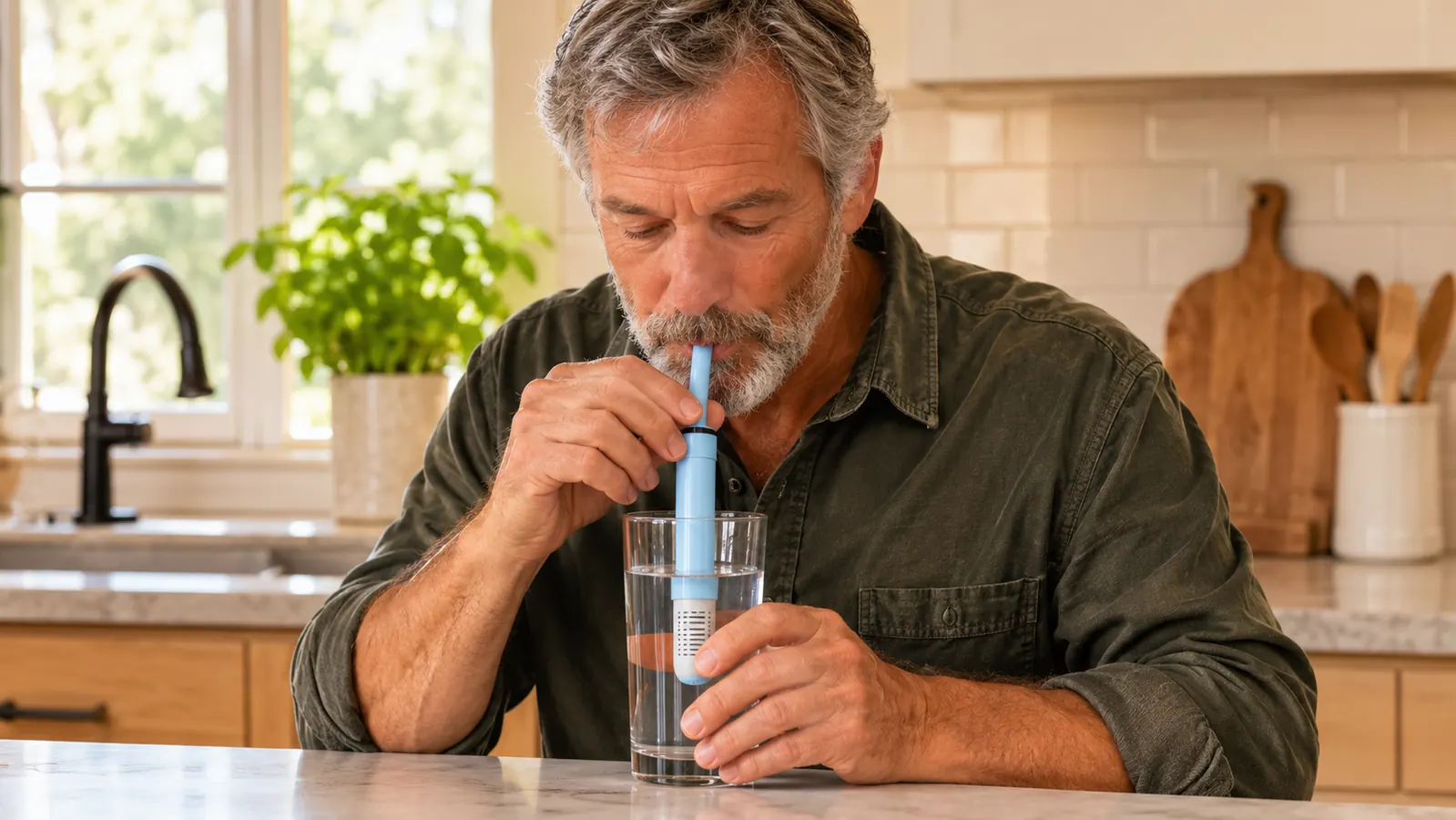
The listing on the LifeStraw Personal says it removes 99.999999 percent of waterborne bacteria, with E. coli and Salmonella named among them, and 99.999 percent of parasites. It says it pulls microplastics down to 1 micron and reduces turbidity. It says one filter is good for 4,000 liters, which is 1,000 gallons. It needs no electricity and no battery. Those are the manufacturer's numbers, not mine. I have not tested anything in a lab and I would not know how to start.
Now the other half, which is the half that keeps people out of trouble. It does not remove viruses. The listing's cutoff is 1 micron, and viruses are smaller than that, which is why the listing does not claim them. It does not remove chemicals, fuel, or salt either. Floodwater can carry every one of those. If I ran that company I would put that sentence on the front of the box, because it is the sentence that stops somebody from drinking out of a flooded garage and believing a straw made it safe.
So the question changes shape. You are not looking for water after a flood. You are looking for the clearest water you can find that has not been sitting in contact with anything on that list. Those are two different searches, and only one of them is a job for a filter.
Step 3: Pick the Clearest Water You Can Find and Let the Mud Settle Out
I want water I can see through. Moving beats standing. Upstream beats downstream. Anything uphill and away from parked cars, fuel tanks, septic lines and flooded fields beats the puddle in the low spot. In our part of Tennessee that usually means the creek at the bottom of the road, and I would walk a good way up it before I dipped anything into it.
Turbidity reduction is in the listing, but a filter is not a settling tank. If you can see dirt, get the dirt out before the water ever touches the filter. Fill a clean pot or bucket, let it sit until the mud drops, pour the clear part off the top, and strain that through a clean cloth. None of that is purification and none of it makes anything safe. It keeps the filter from loading up on the first glass.
Use something with a lid and keep the lid on it. A five gallon bucket that held paint last spring is not a water container, and a cup that has been sitting in the yard is not one either. This sounds like common sense until the second day, when everybody is tired and grabbing whatever is closest.
A filter that stops bacteria and parasites is not a filter that stops fuel. In a flood, that difference is the whole conversation.
And I will say the plain thing here. I have never drunk creek water or flood water through mine. Not during the storm, not since. I am giving you the steps I would take in the order I would take them, and I am not going to dress it up with a story where it saved the day. What it actually did, I will get to in step four.
Step 4: One Person, One Filter, and Keep It Out of a Freeze
The LifeStraw Personal is 1.62 ounces and you drink straight through it. That is the entire interface. No pump, no hose, no cartridge to seat wrong, nothing to plug in. Which also means it is one person at a time. Two people in the house, two filters. Do not hand one around a church fellowship hall and call that a water plan. Ours are labeled in our heads, mine is mine and his is his, and Hollis has never used his.
The listing puts the low end of its temperature range at 1 degree Celsius, so think about where the thing lives. A filter that rides around in a truck bed through a cold snap is a filter you should not count on. Ours sat on the hall closet shelf from last November through February, about three months, and has been inside the emergency backpack since.
Here is the only time I have used mine. Saturday evening of that ice storm, the power had been back a day, the notice had not lifted yet, the bottled water was down to about two gallons, and I filled a glass from the tap and drank it through the filter. We had been boiling since Wednesday, which is what the notice asked for, and I would boil first again tomorrow. That glass was one glass, on the last night, when the supply was getting thin. That is the honest size of the story, and I would rather you have it that size.
Step 5: Build the Water Plan Around the Filter, Not On It
Three layers, and the filter is the last one. Stored water first, because it needs nothing and nobody has to do anything to it. Heat second, because a boil order wants a boil and a boil wants a stove and fuel. The filter third, for the day the stored water is gone and you still have a source you can see through.
The stored water is the layer people skip, and it is the layer that actually carried us. Six gallons lasted two people from Wednesday noon to Sunday with two gallons left, and that is with us being careful. If you get any warning at all, fill every clean container in the house before the tap goes off. It costs nothing and it takes ten minutes.
Then put the filter where you will find it in the dark, and check it on a schedule you will actually remember. Mine gets looked at on the same four dates I use for the power station, the first of March, June, September and December, and a check runs about ten minutes. A filter you cannot put your hand on is the same as a filter you never bought.
What Else Helps
Bottled water and a way to boil are the two things I would put ahead of any filter. Boiling is what the notice asked for and it is what I trust. If you do it on a camp stove, that stove goes outside on the porch or on the ground, never in the kitchen, never in a garage, and never up against a window. We keep two small propane cylinders and used one and part of the second across those three days.
Purification tablets are the other thing people ask about. I have read the labels on them and I have never used one, so I am not the person to tell you how they taste or how long they take to work. What I can tell you is that they are a different tool with different limits. If you are choosing between tablets and a filter, read both labels instead of taking my word or anybody else's.
Do not forget that your food needs water too. The kit in my closet takes boiling water and about fifteen minutes to simmer, so it is not a plan that works without a water plan underneath it. That was the thing I had not thought through until I stood in the kitchen and did the arithmetic on two gallons.
And the last thing, which I mean. No filter, no straw and no kit of any kind makes floodwater safe by itself, and nothing in my hall closet makes me bulletproof. If your county says boil, boil. If your county says leave, leave. The gear is what you reach for after you have already done what you were told.
Read the notice first. Then keep a filter in the closet anyway.
Two LifeStraw Personal filters, one for each person in the house, weigh less than a paperback and need nothing to run. That is the whole reason they ride in my pack.
Amazon Check Today's Price on Amazon →