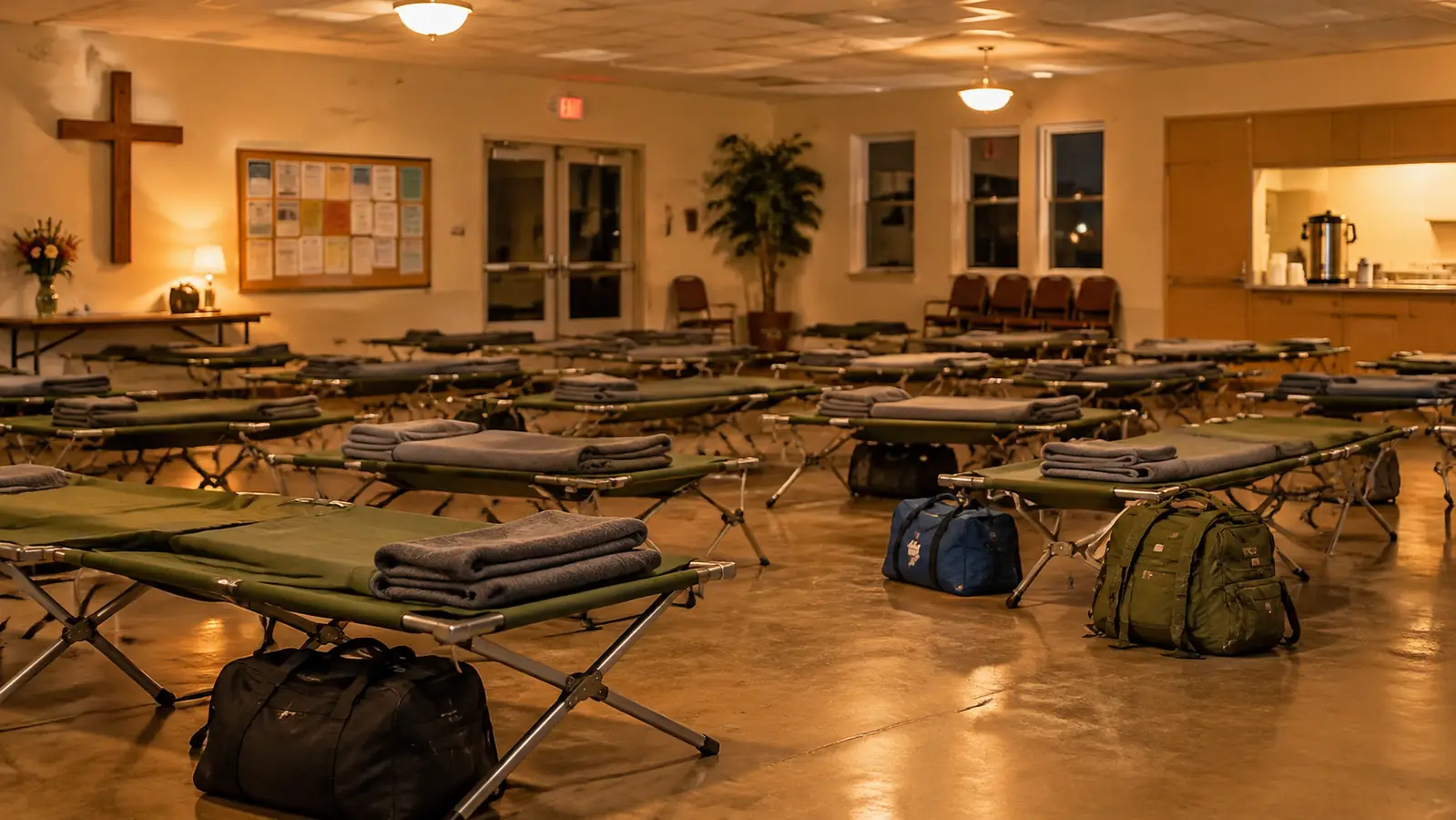
I had never owned a power bank before this year, and I bought one because of a church fellowship hall in town. The creek rose after two days of rain, a deputy came down the road at dusk and told the low houses to leave, and we spent one night on cots in that hall. The outlets near our cots were already taken by other families. My phone was at about 20 percent by morning. That is the whole reason there is a BLAVOR Solar Power Bank in my purse today, and I want to be honest about what it does and does not do before I say another word about it.
Here is what it is not. It is not a home backup and it is not the thing you plug a lamp into. It weighs about 9.3 ounces, it fits in a purse pocket, and it charges a phone. That is the job. I have a Jackery in the hall closet for the house, and I will get to that, but the two of them do different work and I do not want anybody confusing them.
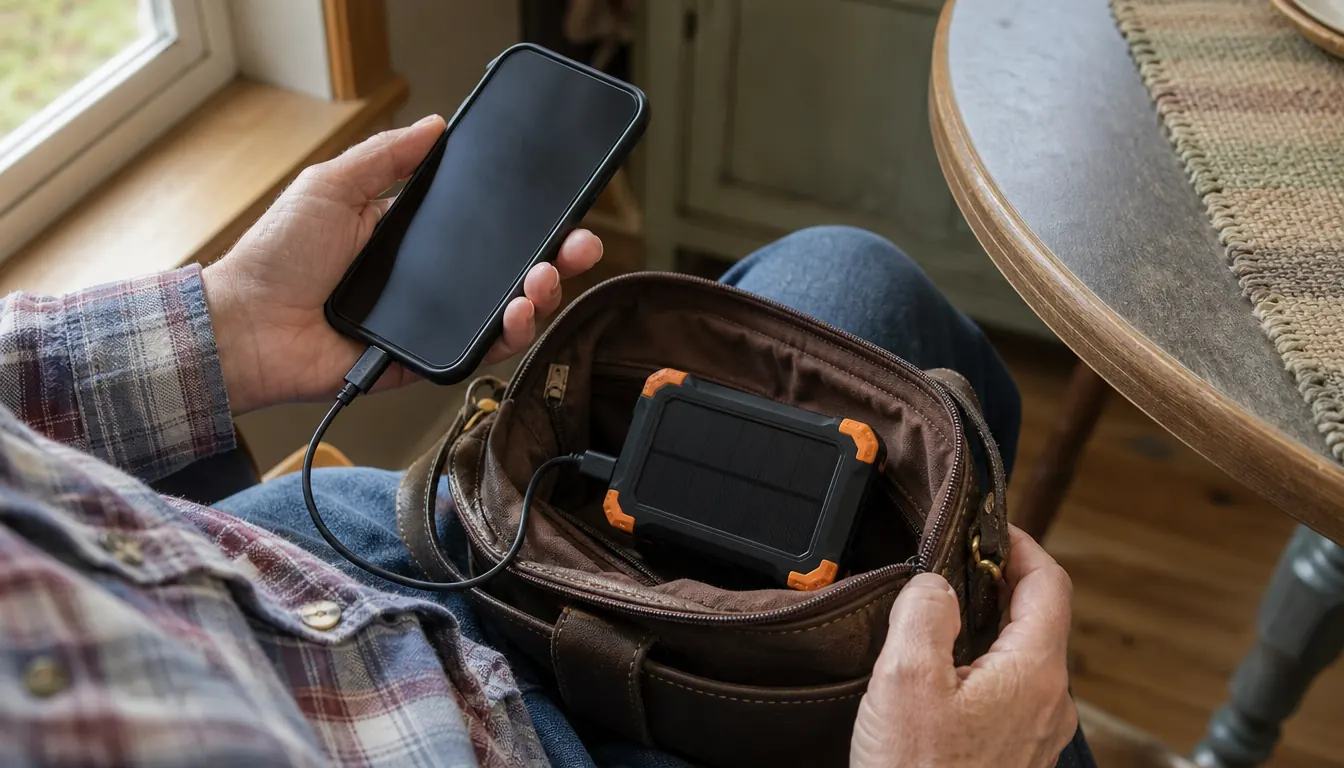
What I wanted was a phone charge that could leave the house. The Jackery is 7.5 pounds and it lives on the closet floor, and that is where it belongs. My phone is the thing that goes with me. So in May I bought the BLAVOR, one unit, mine, and Hollis does not have one.
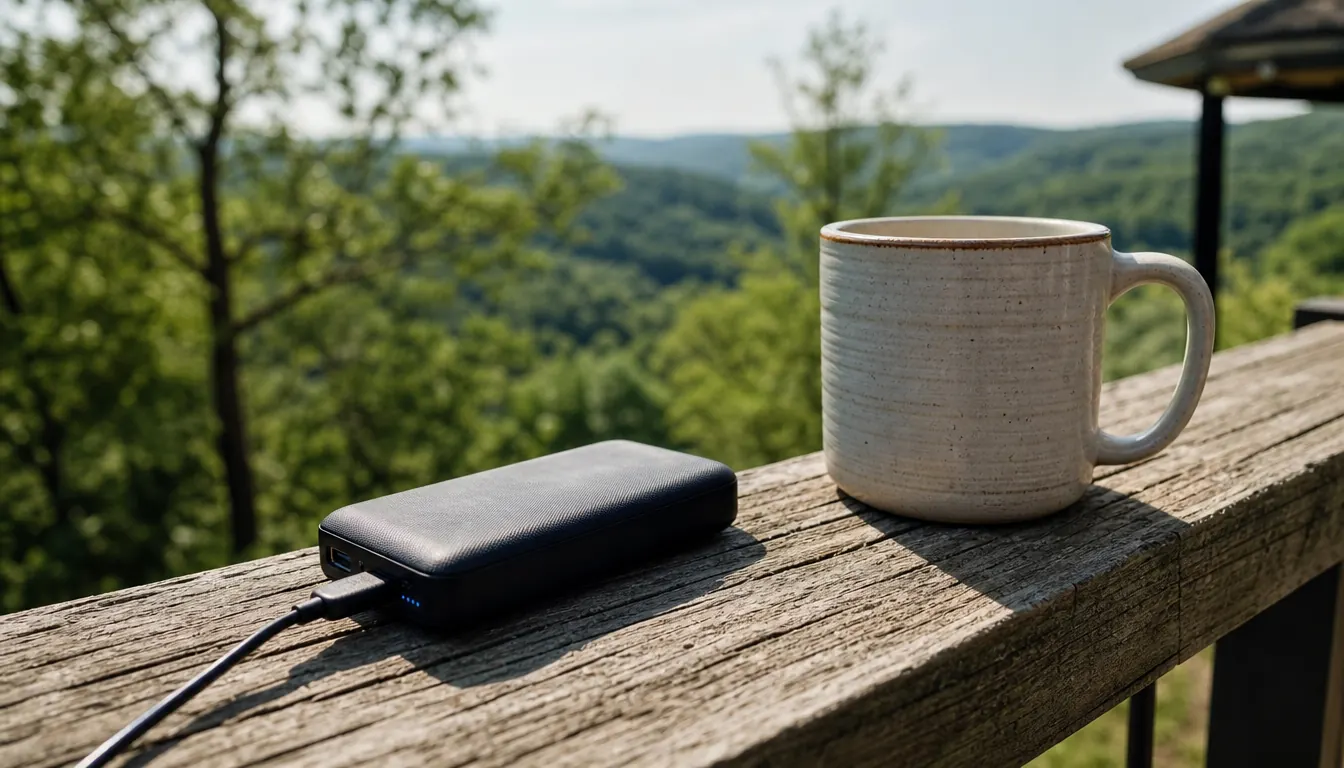
The solar panel is the part I want to be straight about, because it is why I picked this model and it is not why the thing works. I chose a solar one so it can never go completely flat on me if I forget to charge it. That is all I expected from the panel and that is about what I got. One week in June I left it on the back porch rail in the sun most days. The indicator lights went from two of the four to three. That took the better part of a week. So the sun is a trickle here, a backstop, not the way you fill it. You charge it from the wall and let the sun keep it from going dead.
From the wall it takes about four hours, per the listing, and the listing also says a recent phone gets about two full charges out of it. I have not run that test to the end. The BLAVOR has topped up my phone a handful of times on long errand days in town, always with the cable. It has a USB-C port and USB-A ports, and the listing says it charges three devices at once. I have never needed three at once. I have needed one, and I have thought about that cot more than once since.
The sun is a trickle here, a backstop, not the way you fill it. You charge it from the wall and let the sun keep it from going dead.
The charge that can leave the house with you
10,000mAh in about 9.3 ounces, a USB-C port and USB-A ports, and a solar panel that keeps it from going flat while it sits in a purse. Today's price is on the listing.
Amazon Check Today's Price on Amazon →It has two flashlights on one end, and I have used them a few times walking from the pickup to the porch after dark. Not often, but I was glad of them. There is a compass carabiner clipped to the inside strap and I have never used the compass. I know which way is north on my own road. The carabiner does keep it hooked where I can find it, which is the part I actually wanted.
I charge it on the same four dates I charge the Jackery: the first of March, June, September and December. Those dates are written on the paper calendar on the refrigerator, because I will not remember four dates on my own. The first charge was the day it came in May. The listing says it is IPX5 water resistant, which means splashes and rain. I do not take that to mean you can drop it in the creek, and I have not tested that.
There is a wireless charging pad on the other face. I tried it once at the kitchen table. It worked, and it was slower than the cable, so I use the cable. That is not a complaint, that is just how I ended up doing it.
At home in an outage the Jackery is the phone and light station, and this stays in my purse as the spare. That is the division and I have not had cause to change it. There has been no outage since I bought the BLAVOR, so I am not going to sit here and tell you it carried us through one. We had three days without power in the ice storm last January, and I did not own this yet. What it has done is sit in my purse for six months and be there on the days a phone ran low and I was nowhere near my own kitchen counter.
What I'd Tell You If We Were Sitting at My Kitchen Table
If you were across from me with a cup of coffee, here is what I would say. Do not buy this expecting it to run your house, because it will not, and it is not built to. Do not buy it expecting the sun to fill it, because in my one week of leaving it on the porch rail the sun moved the indicator one light and that was the whole of it. Buy it if the thing you actually worry about is your phone going dead while you are away from your own outlets. That is the whole case, and it is a good case. Mine has never failed me and it has never had a hard job either. Now the other side of it. It is heavier than a plain pocket battery the same size, because of the panel, and I notice that in a purse that is already heavy. The solar is slow. The wireless pad is slow. Those are the three things I would say against it, and I still keep it in there. If you want something for the house, get something for the house and leave this in your purse. And whatever you buy, follow what your local officials and your utility tell you. A battery in a purse is not a plan. It is one less thing to think about while you work the plan you have.
One less thing to think about when you are away from your own outlets
10,000mAh, about 9.3 ounces, a USB-C port and USB-A ports, a wall charge in about four hours, and a solar panel that keeps it from going flat. It lives in the purse. That is the point of it.
Amazon See the BLAVOR Solar Power Bank on Amazon →