

The thing nobody tells you about an emergency sleeping bag is that the first time you get into one you are not in the woods. You are on your own sofa, in your own den, with the heat running, feeling foolish. I bought two Go Time Gear Life Bivy bags in February, one for me and one for Hollis, and mine has been out of its sack exactly once. That one hour in February taught me more about this bag than any product page could.
This is not going to be the review where I tell you a bag saved my life. Nothing dramatic happened here. What happened was ordinary and cold. Last January a spell of freezing rain took the power out for three days, we slept in the den on the last two nights because that is where the wood stove is, and toward dawn on the second night the fire burned down and I lay there cold and awake while the room cooled off around me. Nobody was hurt. Nobody was sick. In February I spent a little money on two bags so the next cold night would be easier, and then I got honest with myself about what they can and cannot do.
The Quick Verdict
Warm in a few minutes, small enough that you forget you own it, and loud enough to wake the house. It is a layer, not a bed. I would buy it again.
Amazon Check Today's Price →The bag that lives in the cedar chest and earns its keep in ten minutes
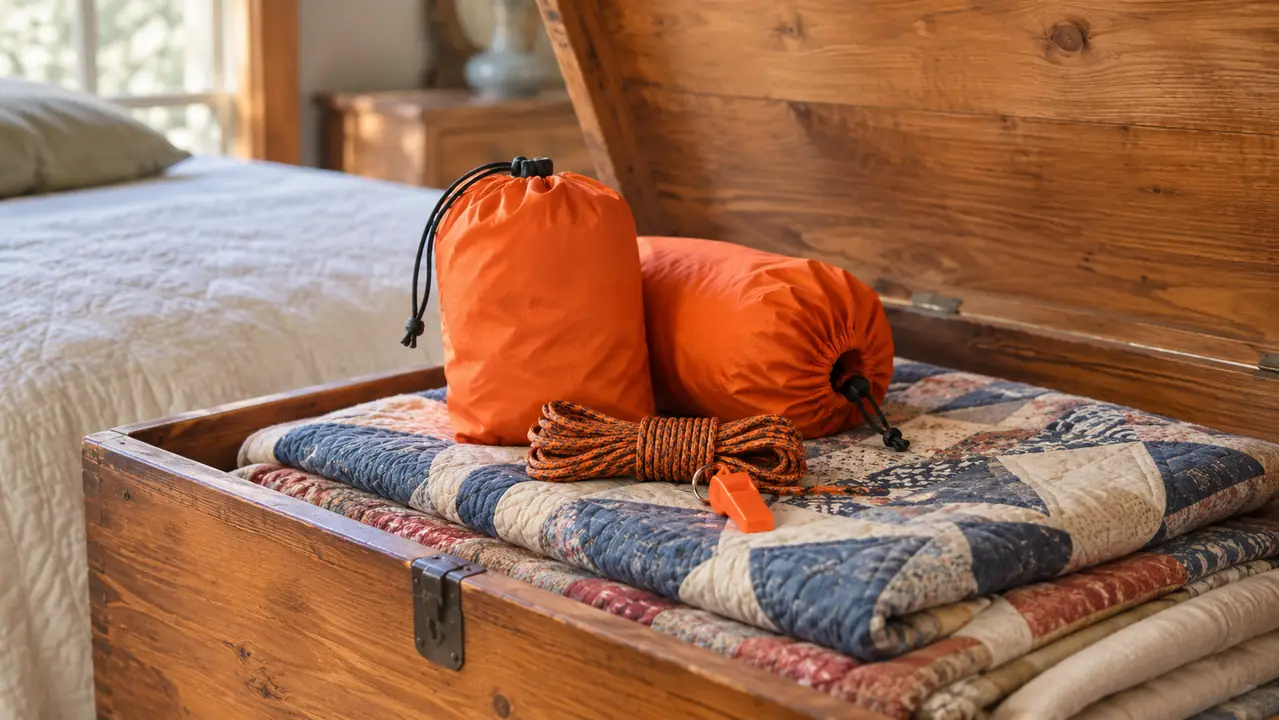
Two bags, one per person, packed small enough to sit on top of the spare quilts. The listing details, the weight and today's price are on Amazon.
Amazon Check Today's Price on Amazon →What Nobody Tells You About an Emergency Bivy
The word bag is doing a lot of work here. This is a thin sheet of polyethylene, sealed into the shape of a bag, with a heat-reflecting lining on the inside. That is the whole idea. There is no fill and no loft. It works by keeping your own body heat from leaving you, and the listing says it retains up to 90 percent of that heat. I am quoting the listing there, because I have no way to measure 90 percent of anything. What I can tell you is that I got in cold, I was warm in a few minutes, and that is the part that matters at four in the morning.
What nobody tells you is that the bag does not breathe. Not a little. At all. I lay in mine for about an hour, and when I got out the inside was damp from my own body. Not soaked, but damp enough that I wiped it down and let it air overnight before I rolled it up. A thing that traps heat traps moisture with it. That is not a defect, it is how the material works, but it is not on the package and you should know it before you plan a night in one.
The other thing nobody tells you is the noise. Polyethylene crinkles. Every time I moved a knee or an elbow it sounded like I was opening a bag of chips in a quiet room. In a den with a wood stove ticking, it is annoying. Next to a spouse who has finally gone to sleep, it is the loudest thing in the room. I got used to it in about twenty minutes. Getting used to it is not the same as it not being loud.
How I've Used It
Here is the whole of my experience, so you can weigh it properly. The cold night I told you about is the only reason I own these, and the one hour on the den sofa in February, with the heat on and a quilt over the top, is the only time I have been inside one. That is not much, and I would rather say so than dress it up.
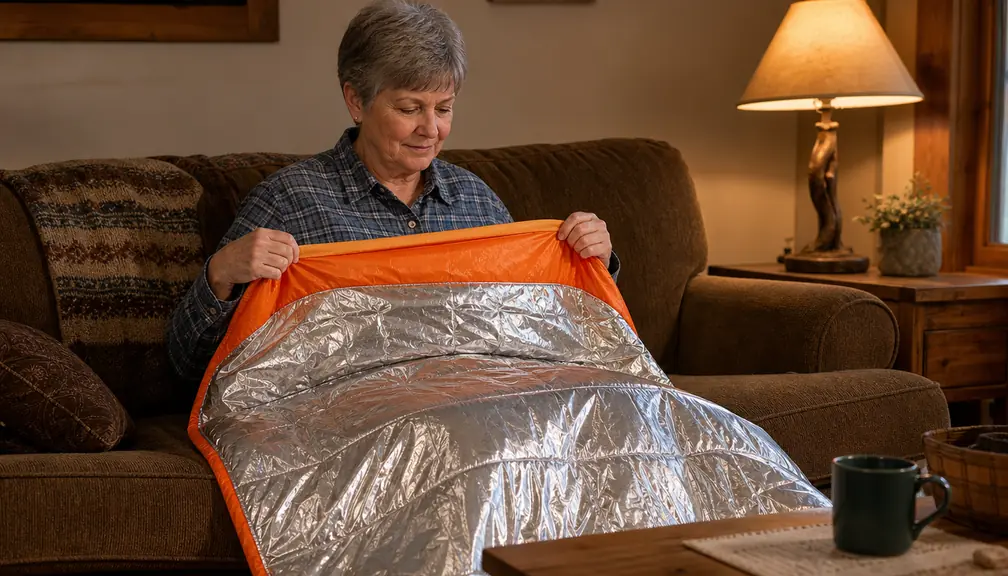
So in February I bought two bags, one for me and one for Hollis, and on a cold evening that month I took mine out of the cedar chest at the foot of the bed, unpacked it on the den sofa, got inside it the way you get into a sleeping bag, and pulled a quilt over the top. The heat was on. I wanted to know what the thing felt like before I ever needed it, and I am glad I did, because that hour is where all of the useful information in this review came from.
It warmed up fast. Faster than I expected from something that weighs what a couple of letters weigh. I got in cold and inside a few minutes I was comfortable, and the quilt over the top did the rest. About an hour in, the inside was damp and I got out. I wiped the bag down, left it open overnight to dry, and the next morning I rolled it tight and worked it back into the sack, which took a few tries. Hollis never opened his. It is still in its sack in the cedar chest, and that is not a complaint about the bag, it is just how it has gone.
Since that February evening, neither bag has been out of its sack. There has been no cold night since then that needed one, and I am not going to invent a story where there was. They sit in the cedar chest at the foot of the bed, on top of the spare quilts. Not in the hall closet, not in the pickup. I know exactly where they are in the dark, and that was the point of buying them. A bag you have to go hunting for is a bag you will not use at two in the morning when the house is cooling off.
What I Liked
- Warms up in a few minutes, which is the whole point of owning one
- The listing puts the bag at 4.1 ounces, and about 5.6 ounces with the sack, the whistle and the cord
- Packs to about the size of a soda can, so it can live somewhere you will actually find it in the dark
- Works as an extra layer inside or under the quilts, and the listing says it can be used as a liner in a regular sleeping bag
- Two of them cover two people, which removes the one mistake I could see myself making
Where It Falls Short
- It does not breathe, so you will be damp inside after about an hour
- The crinkle is loud enough to wake a light sleeper in the same room
- Getting it back into the stuff sack takes practice the first time
- It is thin plastic, so it has to stay away from the wood stove, candles and any open flame
- It is not a sleeping bag and it will not replace quilts or a real bag on a cold night
It warmed me in a few minutes and it left me damp inside the hour. Both of those are the same feature, and only one of them is on the package.
The Warmth Is Real. The Number Comes Off the Label.
The Go Time Gear listing says the bag retains up to 90 percent of body heat. I want to be plain about that. That is the company's figure, not something I measured with an instrument in my kitchen. What I can report honestly is my own hour on a February evening in a heated house. I got in cold, I got warm, and I stayed warm until I got out. The weight figure works the same way. The listing says 4.1 ounces for the bag, and about 5.6 ounces is what you are carrying once you count the sack, the whistle and the cord. Neither number is mine. Both are worth knowing.
The reason it works is not complicated. The lining reflects your body heat back at you, and the shell keeps that heat from blowing off into the room. That means it does the most good in still air, and it does very little if you climb into it wet or if there is a cold draft running across the floor. My plan for a cold night is to wear what I would already be wearing in the house, get in the bag, and then get under the quilts. The bag is another layer. It is not the bed, and it is not the room.
One thing I will not do is pull it over my head. There is no reason to, and I keep my face out at the top. It is thin plastic, and that leads to the second rule. A bag like this has to stay away from the wood stove, from candles and from any open flame in the room. Do not bring a camp stove, a grill or a generator indoors to stay warm, ever, not for an hour and not for a night. And if a long outage is coming and you have somewhere warm to go, follow your local officials and go. A bag that weighs about what a bar of soap weighs is not a reason to sit in a cold house.
The Three Things That Bother Me
The noise is first. I am not a light sleeper and it still got to me. If you are in a shelter with a room full of other people, or in a bedroom with somebody who has finally dropped off, every move you make will announce itself. There is nothing to be done about it. It is the material, and the material is the reason the bag weighs what it weighs and packs as small as it does.
Second is the damp. An hour in, the inside of the bag was wet from me, not from a leak. My own skin did that. The bag does not breathe, so the moisture has nowhere to go. For a single cold night that is a nuisance. For several nights in a row, wet bedding is a genuine problem, and that is worth understanding before you plan on a bag like this for more than one night at a time. It needs to be aired and dried every day you use it. Every day.
Third is getting it back into the sack. Out is easy. Back is a wrestling match the first time. It took me a few tries, and I was in a warm room with the lights on and no particular hurry. My advice is to open the sack wide, push from the bottom, and not try to fold anything neatly. And do it once at home, on a mild evening, in a good mood. Not in the dark, not in a hurry, not with cold hands.
Beyond those three, there is the plain limit of what this is. It will not keep you warm without you in it. It will not cover two people. It will not cushion anything under you. It will not replace the quilts on your bed or a real sleeping bag on a cold floor. It is a thin layer that holds body heat, and the reason I bought two is that one bag for a household of two is exactly the mistake I could see myself making at the worst possible time.
What Else Comes in the Sack
The Go Time Gear sack carries more than the bag. There is a whistle the listing rates at 120 decibels, and there are 20 feet of paracord, both attached to the sack so they cannot be left behind in a drawer somewhere. I have never blown the whistle. I have never unwound the cord. I cannot tell you how either one performs, and I am not going to pretend otherwise. What I can tell you is that they are attached, which means they will be there, which is more than I can say for the camp stove lighter I lost before the ice storm.
The whole package stows in a stuff sack about the size of a soda can. That size is the reason this review exists. Gear you cannot find in the dark is gear you do not own, and a bag this small can sit on top of the spare quilts in the cedar chest at the foot of the bed where my hand will land on it. If it had been the size of a sleeping bag, it would be in the attic, and I would have been cold again this winter.
Who This Is For
This is for the person who has a way to stay home and a way to leave, and who has still been cold in their own house. If you have quilts and a wood stove and you have spent a night lying awake because the fire burned down at four in the morning, two of these are the simplest fix I know of. It is also for anyone filling out a supply closet who wants one small thing in it that addresses being cold, something that takes up less room than a can of beans and does not need to be charged, filled or maintained.
The other thing I would say is buy two if there are two of you. One bag for two people means one person is warm and the other is not, and you will spend the coldest hours of the night negotiating. Two Go Time Gear bags with one quilt pulled over both of you is a better arrangement. Hollis has never opened his, and I would still buy it again for the night he might need it.
Who Should Skip It
Skip it if what you actually want is a sleeping bag. If you are sleeping in a tent or on a hunting trip, this is not that. It has no fill, it does not breathe, and you will be damp by morning. Buy a real bag with a rating on it and be done. This is a backup layer for a bad night, not a bed.
Skip it if noise in the room matters more than warmth, or if you are planning several nights in a row with nowhere to dry it out each morning. And skip it if you were thinking of this as your whole plan. A bag is one layer in a plan. The plan is the radio for news, water you can actually drink, food you can actually cook, and knowing where you would go if the house got too cold. This past January, a bag like this would have made my last two nights easier. It would not have carried us through the storm by itself, and nothing else in my house would have either.
After the trial I aired mine overnight, rolled it up, and put it back in the cedar chest on top of the spare quilts. That is where both of them live now. Not in the hall closet, not in the pickup. If a cold night comes this winter I will take mine down, get in it, pull the quilts over the top and keep my face clear at the top of the bag. That is the whole plan, and it is a better plan than the one I had last January.
Small enough to live in the cedar chest. Warm enough to matter at four in the morning.
The listing details, the packed weight and today's price are on Amazon. If there are two of you, order two. Check the current price before you decide.
Amazon Check Today's Price on Amazon →