The night that made me buy a power bank was not even a real emergency. After two days of rain the creek rose fast, a deputy came down the road and told the low houses to leave, and we spent one night on cots in a church fellowship hall in town. The wall outlets near the cots were already taken by other families, so my phone sat at about 20 percent by morning. But I lay on that cot thinking about a hall closet at home full of gear and an empty space in my purse.
So in May I bought a BLAVOR Solar Power Bank, the 10,000mAh one, and it lives in my purse. I have had it about six months now. It is not a whole-house anything, it will not run a lamp, and it will not keep a refrigerator cold. It does one job, which is my phone when I am away from home, and it does that job well enough that I have not gone looking for anything else. What follows is how I charge it, how I carry it, and how I get an actual charge out of it, because the charging and the carrying are where most people go wrong with a battery like this.
I am also going to tell you the parts I do not like, because a review that skips those is not worth the paper it is printed on. The panel is slow. The unit is heavier than a plain pocket battery. The wireless pad is slower than a cable. None of that has made me stop carrying it, but you should hear it before you decide.
The battery you have with you beats the one sitting in the closet
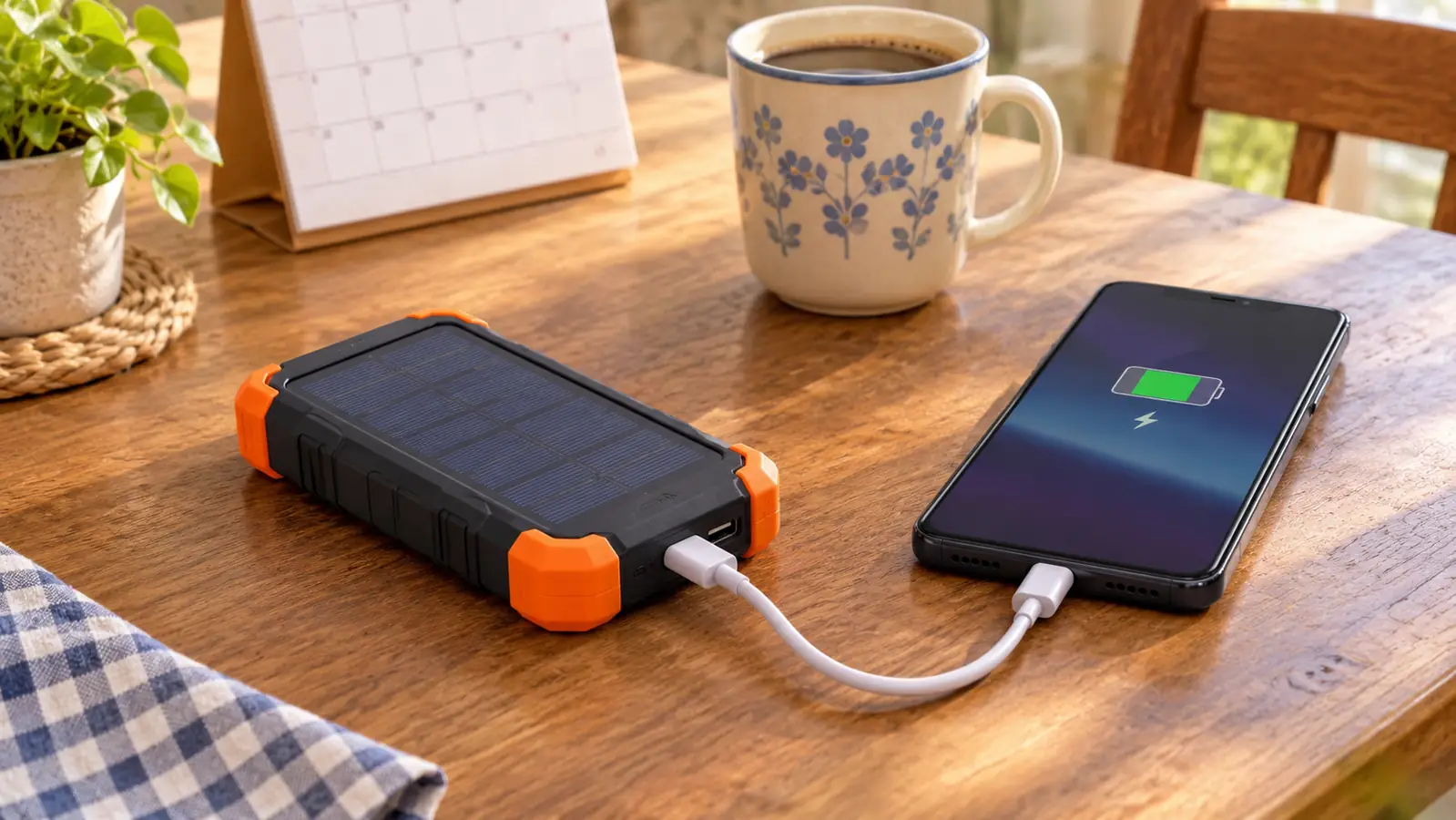
BLAVOR Solar Power Bank, 10,000mAh. 9.3 ounces, pocket size, a USB-C port and USB-A ports, a Qi wireless pad, two flashlights on one end, and a compass carabiner for the strap. Charge it from the wall and let the sun hold the line.
Amazon Check Today's Price on Amazon →Step 1: Charge It From the Wall and Let the Sun Only Hold the Line
The solar panel on this thing is a trickle, and I want to be plain about that before you buy one expecting a solar charger. One week in June I left it on the back porch rail in the sun most days. The indicator went from two of the four lights to three. That is the entire result of a week of middle Tennessee sun in the middle of summer. If you are counting on the panel to fill it, you are going to be counting a long while.
The wall is what fills it. The listing says about four hours to charge, and it charges over USB-C, which is the same cable I use for other things and already had in a drawer. I have never sat and timed it to the minute. I plug it in, I go do something else, and I come back to it later. I picked the solar version for one small comfort: if I ever forget to charge it, it will not sit there completely flat, because the sun will keep a little in it. That is all the panel is for, as far as I am concerned, and once you accept that, the thing is easy to live with.
I charge it on the same four dates I charge the bigger things in the house, the first of March, June, September and December. Those dates are written on the paper calendar on the refrigerator, not kept in my head, because my head is not reliable and a calendar on the wall does not forget. The first charge was the day it came in May. Since then it has followed the calendar, and the calendar is the only reason it is never empty when I want it.
Step 2: Carry It Where Your Phone Already Lives
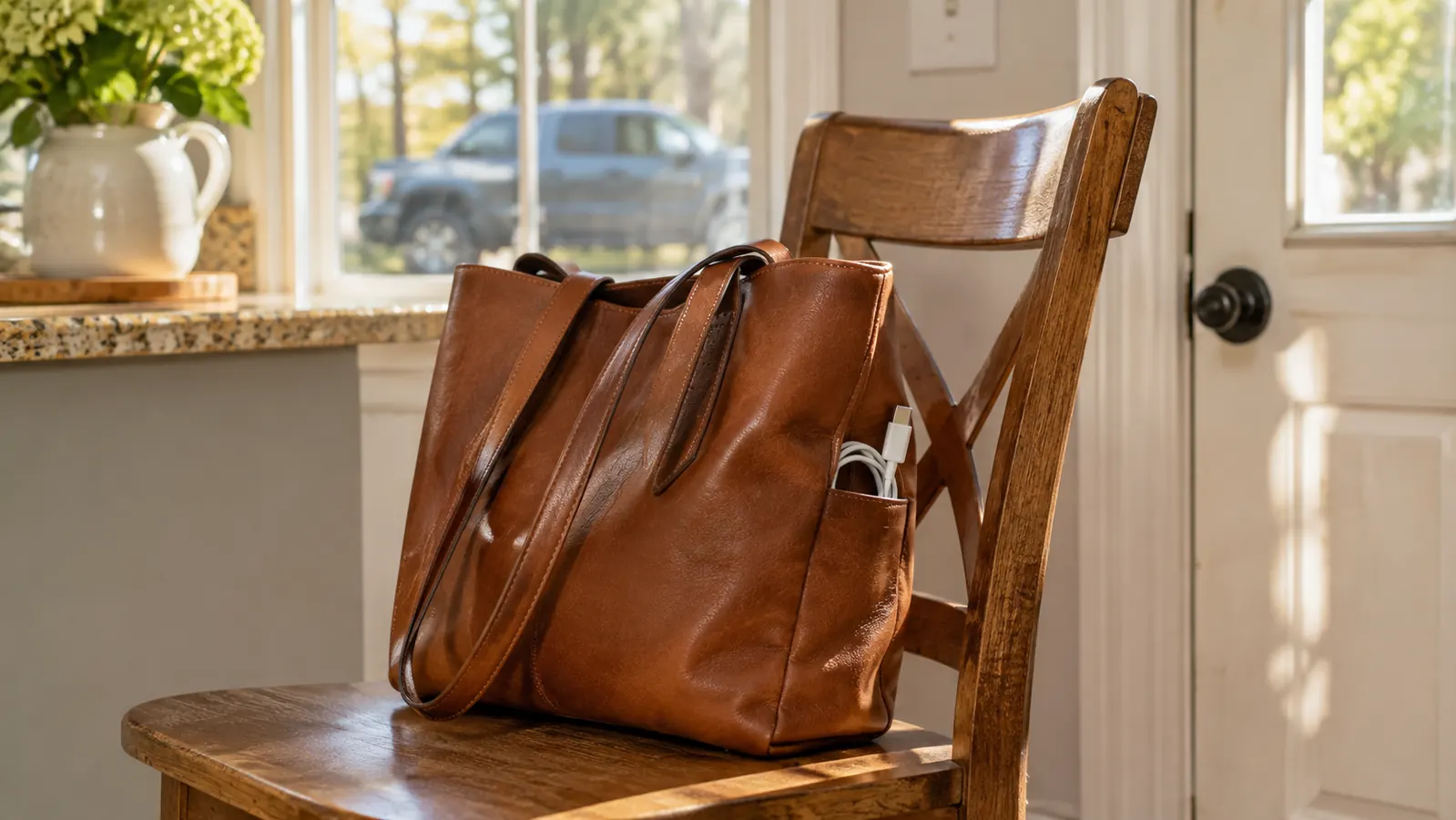
Mine lives in my purse, with the compass carabiner the box came with clipped to the inside strap. I have never used the compass. I have used the clip, which keeps it from sliding down under everything else. A power bank in the hall closet is a power bank that is not with you, and the entire point of this one is that it leaves the house when I do.
The BLAVOR weighs 9.3 ounces and the listing calls it pocket size. It is heavier than a plain pocket battery, and the panel and the housing are why, and in a small purse I notice that. I still carry it every day. What I do not do is move it around. It is not in the hall closet, it is not in the backpack, and it is not in the pickup. It is a purse item, and the day I start relocating it is the day I stop knowing where it is.
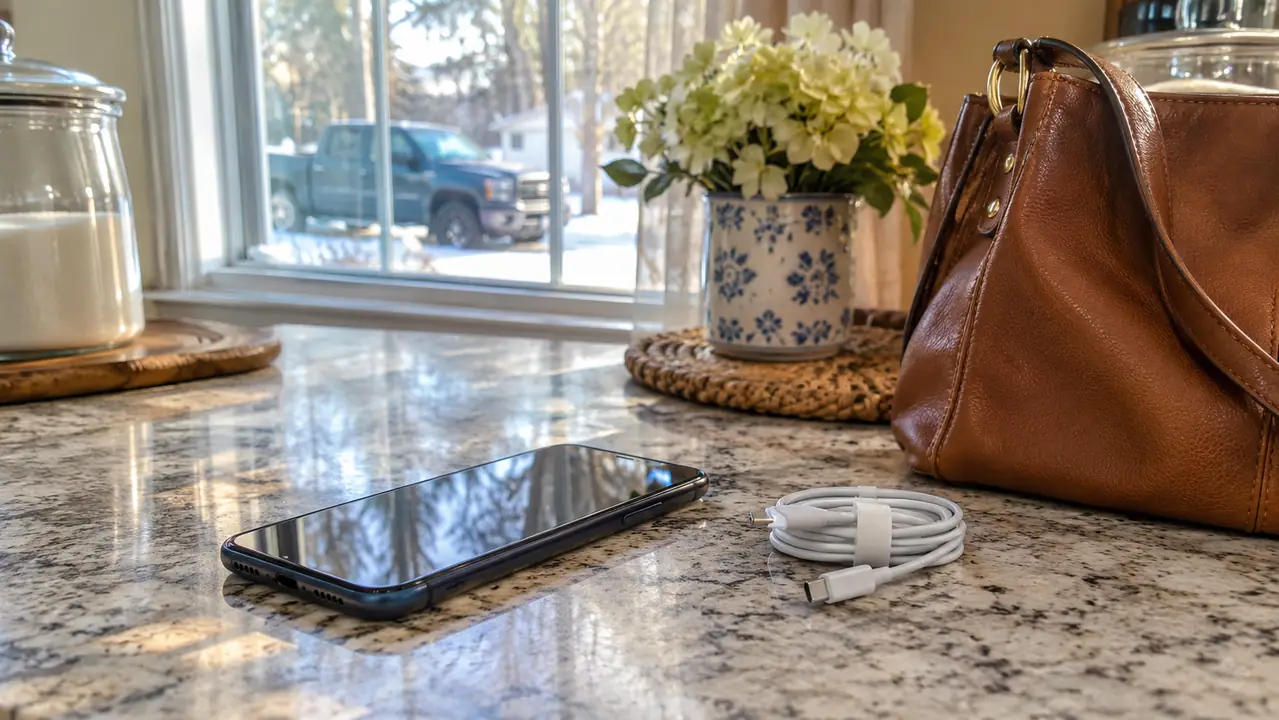
Keep a cable with it. A battery with no cable is a heavy thing with lights on it. Mine has a USB-C cable that stays in the same purse, and I have never once had to go looking for one, because I put it back where it came from the same day I use it. That sounds like a small thing until the evening you need a charge and find the cable at home in a drawer.
Step 3: Use the Cable First and the Wireless Pad Second
There is a Qi wireless pad on one face. I tried it once, at the kitchen table, with the phone lying flat on it. It worked. It was slower than the cable, and the cable is already in my purse, so I have not used the pad again. That is not a knock on it. If you are the sort of person who sets a phone down on a desk all day, the pad is a convenient thing to have.
For a cable you have a USB-C port and USB-A ports, and the listing says it will charge three devices at once. I have only ever charged my own phone from it. That has happened a handful of times on long errand days in town, always with the cable, always a top-up rather than a rescue. The phone goes into my purse with the battery and the cable, and by the time I am headed home it has gained enough to get me through the evening.
If you do use the pad, set the phone flat on it and leave it be, and give it noticeably longer than a cable would take. A phone lying flat and still is where a pad works. Do not expect it to keep up while you are doing something else with the phone in your hand, because it will not.
Step 4: Read the Lights and Be Honest About What a Charge Buys
There are four small indicator lights, and they tell you roughly where the battery stands. Roughly is the word. I do not treat them as a fuel gauge. I treat them as a nudge: three or four lights is fine, two lights means it goes on the wall on the next calendar date whether I think it needs it or not. That is the whole system. It is not clever and it has not failed me yet.
The BLAVOR listing says a recent phone gets about two full charges out of it. I have not run mine from full to empty, so I am not going to hand you a number I did not test. My honest version is that it has topped my phone up a handful of times and I have never worried about it while I was out. If you want a precise count, the listing gives one and I do not.
What the thing buys you is a phone that is not sitting at 20 percent when you need it. That is the entire value, and it is worth more than it sounds. It is not a week of power, it is not a household supply, and it will not keep a lamp lit in the den. It is the difference between a phone that dies in town and a phone that does not, and after one long night on a cot I decided that was worth carrying.
Step 5: Keep It Dry and Know What It Will Not Do
The listing says IPX5 water resistant, which means splashes and rain, not swimming. I would not leave it out in a downpour and I would not drop it in the creek. If it takes a splash, dry it off before you plug anything into it. That is not caution for its own sake. It is a battery with ports on it, and ports and water are not friends.
There are two bright flashlights on one end. I have used them a few times walking from the pickup to the porch after dark, and that is the whole of it. They are handy, not a reason to buy, and if I expected to be out in the dark I would carry a real light. As a thing that lives in a purse, though, they have earned their spot more than once.
What it will not do is the longer list. It has never charged my husband's phone, my radio or a lamp, and I do not ask it to. At home in an outage the bigger unit handles the phones and this one waits in my purse as the spare. And none of it changes the basics: if your utility and your local officials tell you something, that outranks anything in a purse. No battery is a plan on its own.
One week in June on the back porch rail moved the indicator from two lights to three. The sun holds the line. The wall does the work.
What Else Helps
Charge the phone before the weather, not during it. The evening the forecast turns is the evening to plug in, and it costs you nothing but the trouble of finding the cable. A phone that starts a long night at full is a different tool than one that starts it at 20 percent, and that is the lesson I took off that cot.
Write your important numbers on paper and keep the paper with the phone. My cell signal has gone before, and when it does, the numbers stored inside a phone are no help at all to anyone standing in front of you. That is not a battery problem and no battery solves it.
The last thing is knowing which tool does which job. A radio for news. A bigger battery at the house for phones and light. This one for the phone in your purse. When three different things all claim to charge a phone, the usual outcome is that none of them is ready when you need it. Give each one a job and a place, and leave it there.
Six months in the purse, and the lights are there when I reach for them
The BLAVOR will not run a lamp and it will not replace the big battery at home. It will get your phone through a long day away and put a flashlight in your hand on the walk up to the porch. Read the listing, check the current price, and put it where you will actually reach for it.
Amazon Check Today's Price on Amazon →